
 When I work with clients, I generally start my sessions by asking lots of questions to find out what their issues are and what they want to achieve through the work we’re doing together.
Those Well Formed Outcome questions are a therapeutic tool per se, as they’re designed to help the client looking at their issues in a different way. By challenging their generalisations, reconnecting with the deeper meaning behind their deletions and distortions, they already start the change process.
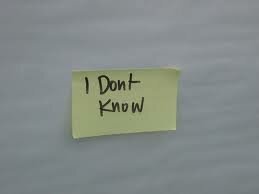
One of the most common answers I get, however, is “I don’t know”. I’m always very intrigued by this kind of reply, as I’m wondering what is it that the client doesn’t want to face by avoiding answering my question. Don’t get me wrong, there are some times when one genuinely doesn’t know the answer. Such as if I ask you to tell me what’s the first name of Einstein’s grand mother. However, you could say that you don’t know but you could find out.
The questions I ask my clients are more orientated towards their internal processes, thoughts or feelings. And when they tell me they don’t know, I think “but if YOU don’t know, who does?! And if you close the conversation with this answer, are you truly taking responsibility for yourself? Are you being the one in charge of your life?”
Have you ever been in a situation when you meet up with a friend and when they ask you “so where do you want to go?” you find it easier to tell them “I don’t know, what do you think?!” rather than make the decision? Even though your surrendering the choice doesn’t have major consequences in this situation, I’m wondering where else you may come up with the same answer…
When I ask a client, for example “what stops you from achieving your goal?” and they tell me “I don’t know”, I’ve noticed that it can mean a few different things:
- Either they’re scared of the answer
- Or they’re worried to look stupid or to be wrong
- Or it’s easier than thinking hard to find the answer
- Or they haven’t yet thought about it
- Any other reason you can think of?!
In any case, what is more useful? Staying stuck or exploring the answers, get the opportunity to learn something new about yourself, and perhaps decide to do something about it?
I know sometimes that the answer can be scary. Yesterday I was working with a client who has got anger issues. And when I asked him “what are you angry about?” he kept repeating “I don’t know” as you would have guessed. When I gently challenged him on that, he recognized he was very angry with his father and felt really guilty about it. But after a while he accepted those feelings, and was ready to start working on them. Making another step forward on his personal journey.
So my question to you for this week (and make sure you don’t answer I don’t know!!) is, what is it you’re trying to avoid when answering I don’t know to a question about yourself?