
Counselling or NLP therapy?

Why would you choose NLP therapy rather than counselling or psychotherapy?

Most clients I see in my practice bring up issues that could very well be treated via traditional therapy. Such as stress, anxiety, low self-esteem or even depression. In most cases, it only takes a few months for their symptoms or issues to be completely solved using integrative NLP and hypnotherapy processes. So how come it generally takes much longer with traditional therapy?

The main focus of counselling or psychotherapy sessions is on the issues. Where they come from, what caused them, what are the emotional roots as well as analysing the impacts they have in one’s life. However, once you’ve done this work, where do you take it from there? How do you go from understanding the root causes and impact of your issues to solving them? Who has ever stopped smoking, lost significant amount of weight or cured a strong phobia by only talking about it?!

In my personal experience of counselling, after having analysed the ins and outs of the issues I’ve been often told “You can’t solve your issues; You can only learn to live with them”. And I strongly disagree. Those are beliefs that were appropriate perhaps in the early days of therapy, but nowadays, with the incredible development of new approaches and alternative therapies, I don’t believe there is such thing as an impossibility to resolve an issue. Don’t get me wrong, it might only be a belief, but at the end of the day, what is most useful? To believe you can’t resolve your issues and you merely have to live with them and reduce the damages they have in your life, or actually believe there’s a way to totally free yourself from them? I know what my clients who completely recovered from chronic fatigue, M.E or depression would say…

Counselling and Psychotherapy can be very useful however. Sometimes people don’t feel happy but they have no idea why. In those situations, it can be extremely helpful to get the support of a qualified therapist to shed light on what is causing those negative feelings. And most of the clients who walk into my practice actually already know the reasons of their uneasiness, whether they’ve done some previous therapy work or by analysing it themselves. Which makes our treatment much easier and faster than if we had to start from scratch.

However, analysing and understanding one’s issue has never made it fully disappear. It’s like saying that when my car broke down a few weeks ago, simply knowing that the clutch wasn’t working any more because it was rusted was enough to magically make it work again. I obviously needed to do something about it, go to the garage who has the tools to repair the car…and that’s exactly what NLP provides. Once you understand where your issues come from, you need the tools to solve them. And NLP and hypnotherapy are among the most effective ones I’ve encountered to so such thing. Oh, and by the way, you don’t need to spend years and years in therapy either to sort yourself out…:-)
Introducing Person-Centred NLP

Hi, welcome to my new blog! My name is Peggy and I’m the director of the new Person-Centred NLP course at the Smart School. You may be wondering “so, what’s person-centred NLP”?! That’s a very good question.

Person-centred NLP was born out of observation of the current NLP world. NLP has got a  reputation for being a quick-fix tool that can help people solve their issues almost at the click of a finger. When I first learnt NLP, I must confess that’s exactly what I did. Got the client in, quickly run through their history, and jump in with one of the brilliant NLP process I had in my magic tool box. Most of the time, it did the trick. However, when checking on some of those clients a few months later, I had quite a percentage of people reporting the changes weren’t quite as powerful as expected on the long run.

So when I saw those clients again, we started an in-depth conversation in order to find out underlying issues that were getting in the way. And the more we talked, the more we naturally created a special relationship, that seemed to be allowing my clients to make lasting changes in a more natural way.

With time growing, I spent more and more time developing this kind of relationship until I realized that some of my clients were getting incredible results, sometimes even without the help of NLP or hypnotherapy standard “exercises”. And it simply confirmed what studies had already shown, the fact that how the client and the therapist relate is one of the most important aspects of a successful therapeutic encounter, regardless of the therapy.

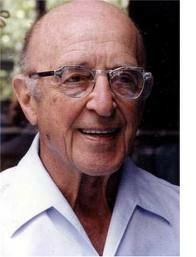
NLP person-centred therapy was then born and is deeply inspired by Carl Rogers six conditions needed to produce personality changes:

  1. Psychological contact or a relationship between the therapist and the client (on the professional basis of course!), where there’s rapport and respect of both persons as important individuals.
  2. Client’s congruence, where the client actually is aware of the issue and genuinely wants to change it.
  3. Therapist’s congruence: now I personally think this is a very important one: the therapist is genuinely involved in the session and will display honesty and care for their client.
  4. Therapist unconditional positive regard towards the client, with a genuine belief that the client has all the inner resources and the capacity to change
  5. Therapist’s empathy, where the therapist feels compassion and empathy for the client in order to fully understand their map of the world
  6. Client’s perception of the therapist’s empathy: not only is it necessary for the therapist to have empathy, but it is essential that the client receives it appropriately.

I have been applying those principles in my personal NLP/hypnotherapy practice for a while now and I have noticed indeed how much more effective those sessions were. I do believe that in order to change, people need unconditional support and approval, and I think that’s what describes best in essence our new person-centred NLP approach.