5 steps to avoid being overwhelmed

The reason why you haven’t seen many of my blogs recently – and apologies for that – is because in the past few weeks I was working between France and England. In France, I was running seminars and coaching sessions for people suffering from chronic illnesses. Back in UK, I was working with my NLP/hypnotherapy clients, training my Person Centred NLP/H courses and performing music concerts at the weekend. I must say that I’m often asked “How do you cope with so many things to do?” And I’ve realized I’ve developed a strategy to avoid being overwhelmed.

To start with, I go back to the basics and make sure I sleep enough, I eat healthily and get enough exercise. I’ve used the NLP spatial anchoring technique to motivate myself to exercise, submodality change work and the Swish to alter my food taste in order to have more healthy ones. I also make appointments with myself in my diary to go swimming and meditate, as that gives my unconscious mind the message that I am, and my health is as important as the other areas of my life.

And finally I make my “to-do” lists. The first list I make is a monthly one. At the beginning of each month, I write down what my goals are for the next 30 days, whether is preparing my new NLP course, or the next Smart School exiting transformational future workshop, doing my tax return, reading that book I meant to read for ages, or writing my blog.

Then I chunk down this monthly list into a weekly one. For each task, looking at all the steps I need to take to complete the task. I schedule them in the week looking at my wall calendar, deciding realistically how long each task will take and when is the best time to do it during the week. I then write it down in my diary.

Finally I chunk that list down into daily tasks, reviewing it each night to fine tune it according to what is left to do. So I’m going to sleep having written down my to-do list for the following day, which takes it off my mind and allows me to go peacefully to sleep, avoiding insomnia based on the worry of so many things to do.

The following morning, after having had a healthy breakfast and meditated, I look at my to-do list and get ready to start work. Now, I don’t know about you, but I am brilliant at finding excuses to delay starting work. Social media, needing a break, having to check this important thing on internet, feeding the cat…so I’ve created a great way to avoid falling into this trap: I do the NLP perceptual positions on myself. The first position, is me being my own boss. That’s when I decide which tasks need to be accomplished and by when. The second position, that I take every morning, is me being the employee who’s been asked to perform a task. Because in reality, the main reason that prevents us to do what we are supposed to do, is because we give ourselves the choice, don’t we? So I simply step into the shoes of someone who doesn’t have the choice. An employee whose boss requested a task.

So here are a few tips to cope with being overwhelmed:

1. Write down every thing that needs to be done

2. Write down all the necessary steps for each task

3. Looking at your diary, decide when you can realistically start working on it making sure you stay balanced as much as possible

4. When working on one task, only focus in that one thing, knowing you’ve concretely planned already for the rest of it to be dealt with later. Meditation does help to stay focused in the here and now rather than worrying about what’s next to do.

5. Regularly take some deep breath to relax your body and oxygenate your brain making sure your keeping your concentration levels at their peak.

Hope that helps! Please let me know your strategies to handle too many things to do by dropping a comment below!

 

5 tips to boost your self-esteem

Having explored the difference between confidence and arrogance in my previous post, and hopefully having helped you to accept the idea that’s is ok to become more confident, let’s look today into how you can increase your self-esteem and self-confidence.

1. Make a list of your qualities and achievements. For example, writing down that you are kind, funny or creative. And recognising achievements such as graduating from school or passing your driving test. Even though those qualities and achievements might seem to you as trivial, they still represent what you are good at. No matter if they are common skills or attributes. When you look at your flaws, you probably don’t dismiss them because others have it too; do you?! So why would you do that for your qualities?!

2. Ask people you love and trust to give you a list of the qualities they think you have. You might be surprised on how much more positively people who love you see you than you see yourself…

3. Look into the negative beliefs you have about yourself, such as “I’m not good enough”, “I’m not loveable”, “I don’t deserve being (successful, happy etc…)”. Where do those beliefs come from? What negative messages have you received as a child and from whom? Start to look for counter evidences for those beliefs in your everyday life, such as for example what you’ve already achieved that show you are indeed good enough. Or how many people love you that prove that you are indeed loveable…

4. Take one of this limiting beliefs and ask yourself: what would it take for this belief to be false? For example, taking the belief “I’m not loveable”. What would it take for anyone to be loveable according to your criteria? How can you then relate this to yourself?

5. Finally if those beliefs are deeply engrained, ask an NLP master practitioner to help you sorting them out. There are many brilliant processes that can help you re-program your mind to get some more positive and useful beliefs.

I hope that helps, looking forward to reading your feedbacks!

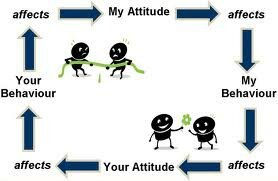
7 ways to better communicate in relationships

As I was telling you in my previous post, personal journeys can affect relationships. I have witnessed a lot of people embarking on a deep meaningful path and soon after breaking up with their partner. Fortunately, it doesn’t necessarily have to be that way, and NLP provides some great tools to improve your relationships.

Here are a few tips that can be useful for a better communication:

  1. When talking about the issues with her husband, the client I was telling you about in my previous post was complaining that he never asked how our sessions went. She said I know he doesn’t ask how my session went because he doesn’t care”. Her husband actually never stated those words, and she simply projected her deepest fears onto him. I challenged her by asking if she thought it was possible that there was at least one other explanation to why he wouldn’t ask. And of course, she realised that he might simply want to give her privacy; or that he was forgetful; or he was scared to ask in case she wasn’t care on sharing… You get the picture :-) Mind reading can be deceitful and lead to conflicts. When you hear yourself talking in this way, make sure you’ve got hard evidences to support your statement. Or more likely, start to wonder what other explanation there could be for their behaviour… Continue reading

5 ways to make better decisions

Do you find it sometimes difficult to make decisions? Have you ever been thinking that on one hand you would like to do something…but on another hand, there might be a better option?

Today one of my clients looked very stressed when he arrived at our session; He was buying a flat and had to choose between two possible options. Lots of money was involved and naturally he found it very difficult to make the right decision.

My first step in those situations is to find out what stops people from making a decision; to elicit some limiting beliefs or potential deep engrained patterns. And most of the time, as it was the case with this client, the reason they struggle is the fear of making a mistake and having to face the consequences.

So here are a few tips I use to help myself and my clients in those situations:

  1. Pros and Cons: The traditional approach of making two columns for each choice you’re contemplating: one for the pros and one for the cons. Writing it down might already help you getting some clarity about why you’re hesitating.
  2.  An opportunity to learn: Rather than worrying about making a mistake before and then worrying about having made a mistake after, you could choose a different approach: You could remember that mistakes are inevitably parts of our lives and also represent an opportunity to grow and learn. Perhaps the choice you’re about to make will turn out not to be the best one in the long run. But in the meantime and whilst you don’t know fully the outcome just yet, you will have learnt some valuable information that will allow you to make more informed choices in the future.
  3. Future pace: Sit comfortably and close your eyes. Take yourself into the future, having chosen your first option. What does that look like? How does it feel to have made this choice? What opportunities did that bring in your life? Now, come back to the present and do the same with your second option. Which one do you feel more comfortable with?
  4. Descartes quadrant: Being French and having studied mathematics, I can’t help using the wonderful NLP tool that Descartes quadrant is :-) It looks like this:

• In the first quadrant, ask yourself: what happens if I do it?
• In the second quadrant, ask: what doesn’t happen if I do it?
• In the third quadrant, ask: what happens if I don’t do it?
• In the fourth one, ask: what doesn’t happen if I don’t do it?

For example my client answered the following whilst contemplating buying the flat on the top floor:

• What happens if I do it? I get a wonderful view
• What doesn’t happen if I do it? I can’t save money as this one is more expensive than the other one
• What happens if I don’t do it? I have money to buy a car
• What doesn’t happen if I don’t do it? I’m not going to be able to have barbecues on the roof

And according to his hierarchy of criteria and values, he managed to decide what was the most important for him and make his choice congruently. Even though the process is simple, I’ve found that whilst writing down the answers people tend to get a strong sense of what they actually really want to do.

5. And finally, listen to your gut instinct Most of the time there’s a feeling deep down that guides you towards the right decision. Locate this feeling in your body, where do you feel it the most? What texture is it? What image or colour is associated with it? In which direction does it move? It can be very useful to learn to recognise it for the future to help you know what’s right for you. I must say I make almost all my decisions based on my gut instinct!

I hope this is useful, and feel free to drop me a comment with your thoughts and ideas on that topic!

Tackling Procrastination

Do you find yourself postponing things you have to do? Like sending important emails, or making phone calls that have been on your to-do list for days?! Or even going to the gym, paying the bills or launching your business? Are you finding excuses to avoid doing that? Such as being too tired right now, or not having enough time, etc.?

If you recognize this pattern in yourself, welcome to the world of procrastination: the ability to avoid what needs to be done, whilst keeping busy doing anything else. That can be quite a debilitating pattern. So if you want to change it, the first question to ask is “What stops you from getting things done”? You may be tempted to answer “I don’t know“. If it’s the case, I recommend you read my previous post! :-)

Sometimes my clients think it’s about being lazy. But interestingly when they look deeper, they find they’re only “lazy” about a certain types of tasks, the ones that challenge their identity or their beliefs…That’s interesting, isn’t it? But often the root causes are sitting much deeper than we might think… Continue reading

Allowing your client the space they need

A lot of coaches and solution-focused therapists are taught almost from the word “go” that it’s not good for the client to talk about their issues. That the session should focus on creating goals and solutions, rather than dwelling on problems.

I totally agree with that. To a certain extent. But let me first tell you why I think it’s important to stay in a solution-frame rather than a problem-frame. To begin with, when clients look for help, it’s safe to assume that by then they have recognised that they have an issue. Therefore they must have thought about it a lot, perhaps talked about it even more, with friends, family or a counsellor. And if they’re still coming to see you after that, it means that all that dwelling hasn’t necessarily helped…

So it’s time to do something new. Through some skilful questions, we allow the clients to explore new possibilities and start to discover some routes they may have not been aware of before. Continue reading

Losing weight with NLP

Summer is almost here, as the weather shows…finally! So you might have planned some sunny holidays soon, and it’s time to think of getting in shape to parade on the beach :-)

I often hear people talking about dieting a few weeks before going on holidays. And perhaps, you’ve noticed as well that diets don’t really work…Because eventually, you’ll put back on the weight, and will have to do another diet before your next holiday before you put on weight again etc. You get the picture.

With NLP, I’ve found a very good way to avoid turning into a yo-yo and staying fit all year long. Because it’s not about dieting, it’s about having a different lifestyle. So how can you use NLP to make sure you stay on track and healthy most of the time?

  1. Set your goal: specifically, what is your ideal weight? Instead of focusing on how much pounds you want to lose, which might be discouraging, I suggest you focus on the weight you want to achieve instead. Focusing on a positive outcome will indeed motivate you much more.
  2. Take a moment to think of the following: How will you know concretely when you’ve achieved your goal? How will it feel? What will you be saying to yourself? How different will you look?
  3. Examine your current food intake: perhaps get a food diary to keep track of what you eat. Are you eating a lot of processed food? Refined sugar? Carbs? What is the food you recognise as not contributing to you being fit? Once you’ve made a list of the non-healthy food, make a list of what food you would like to eat more of instead. That can include vegetables, protein, fruits…
  4. Use the brilliant NLP tools that are the Swish or changing Submodalities, to start shifting your tastes; you’ll train your brain to want more of the healthy food whilst disliking the junk food.
  5. What about your exercise pattern? Are you exercising regularly? If not, what’s stopping you? Lack of motivation? In which case I recommend doing a spatial anchoring process to get yourself in an exited and dynamic state when thinking of your next session at the gym. I find the spatial anchoring is more effective than a normal anchoring in this case, as you’re actually creating bigger changes at the  physiological level as well as in your mind.
  6. Sometimes there are some deeper underlying causes to over-eating. It may cover up for emotional emptiness, anxiety or even anger…you could use a parts process or a core transformation to discover your hidden secondary gain, and gently allow it to update and resolve. If you’re interested in those processes, feel free to check my previous post on that topic.

I found the combination of those techniques very effective on myself and on my clients; as the brain learns quickly, you might find you’re going to progressively and effortlessly get into a healthy routine. One of my clients from a couple of years ago managed to lose two stones in a month and reported that he didn’t even have to sacrifice anything, he said “it’s as if my tastes had changed”.

I recently bumped into him in the local supermarket and was delighted to see he was still slim and fit! He was beaming when he told me how easy it was for him to stay healthy.

So enjoy those tips, and I’m looking forward to hearing how quickly you’ll shift your eating habits and look wonderful in your swimming suits!


You don’t know?

When I work with clients, I generally start my sessions by asking lots of questions to find out what their issues are and what they want to achieve through the work we’re doing together.

Those Well Formed Outcome questions are a therapeutic tool per se, as they’re designed to help the client looking at their issues in a different way. By challenging their generalisations, reconnecting with the deeper meaning behind their deletions and distortions, they already start the change process.

One of the most common answers I get, however, is “I don’t know”. I’m always very intrigued by this kind of reply, as I’m wondering what is it that the client doesn’t want to face by avoiding answering my question. Don’t get me wrong, there are some times when one genuinely doesn’t know the answer. Such as if I ask you to tell me what’s the first name of Einstein’s grand mother. However, you could say that you don’t know but you could find out. Continue reading

Scared of public speaking?

One of my clients is a professional musician and this morning needed some help with stage fright. I found this session very interesting as having been a professional musician myself I have faced similar issues and successfully developed NLP based strategies to handle them.

But I’ve also realised, as I worked a lot with people suffering from public speaking anxiety and performance nerves that the internal thought processes in all those situations are very similar. I taught them those strategies and it did work as well as with the musicians or actors I worked with in the past.

The most common reason why people get nervous when performing is that they disassociate. Meaning that they step into their audience’s shoes looking at themselves performing. And wondering what people think of them, or even worst, assuming that their audience is judging them in a negative way. The best approach I found in dealing with that pattern is to force myself to stay associated, which means fully engaged in my sensorial experience rather than lost in my thoughts ; Focusing on the content of the performance, whether it’s the music, the lyrics or the words. In a sense it’s very close to meditation, because our (negative) thoughts are the strongest element that pollute our experience. And by taking control of those thoughts, we are able to step into our experience in a better way and access our useful internal resources.

Here are a step by step simple process to help improve your performances: Continue reading