5 steps to avoid being overwhelmed

The reason why you haven’t seen many of my blogs recently – and apologies for that – is because in the past few weeks I was working between France and England. In France, I was running seminars and coaching sessions for people suffering from chronic illnesses. Back in UK, I was working with my NLP/hypnotherapy clients, training my Person Centred NLP/H courses and performing music concerts at the weekend. I must say that I’m often asked “How do you cope with so many things to do?” And I’ve realized I’ve developed a strategy to avoid being overwhelmed.

To start with, I go back to the basics and make sure I sleep enough, I eat healthily and get enough exercise. I’ve used the NLP spatial anchoring technique to motivate myself to exercise, submodality change work and the Swish to alter my food taste in order to have more healthy ones. I also make appointments with myself in my diary to go swimming and meditate, as that gives my unconscious mind the message that I am, and my health is as important as the other areas of my life.

And finally I make my “to-do” lists. The first list I make is a monthly one. At the beginning of each month, I write down what my goals are for the next 30 days, whether is preparing my new NLP course, or the next Smart School exiting transformational future workshop, doing my tax return, reading that book I meant to read for ages, or writing my blog.

Then I chunk down this monthly list into a weekly one. For each task, looking at all the steps I need to take to complete the task. I schedule them in the week looking at my wall calendar, deciding realistically how long each task will take and when is the best time to do it during the week. I then write it down in my diary.

Finally I chunk that list down into daily tasks, reviewing it each night to fine tune it according to what is left to do. So I’m going to sleep having written down my to-do list for the following day, which takes it off my mind and allows me to go peacefully to sleep, avoiding insomnia based on the worry of so many things to do.

The following morning, after having had a healthy breakfast and meditated, I look at my to-do list and get ready to start work. Now, I don’t know about you, but I am brilliant at finding excuses to delay starting work. Social media, needing a break, having to check this important thing on internet, feeding the cat…so I’ve created a great way to avoid falling into this trap: I do the NLP perceptual positions on myself. The first position, is me being my own boss. That’s when I decide which tasks need to be accomplished and by when. The second position, that I take every morning, is me being the employee who’s been asked to perform a task. Because in reality, the main reason that prevents us to do what we are supposed to do, is because we give ourselves the choice, don’t we? So I simply step into the shoes of someone who doesn’t have the choice. An employee whose boss requested a task.

So here are a few tips to cope with being overwhelmed:

1. Write down every thing that needs to be done

2. Write down all the necessary steps for each task

3. Looking at your diary, decide when you can realistically start working on it making sure you stay balanced as much as possible

4. When working on one task, only focus in that one thing, knowing you’ve concretely planned already for the rest of it to be dealt with later. Meditation does help to stay focused in the here and now rather than worrying about what’s next to do.

5. Regularly take some deep breath to relax your body and oxygenate your brain making sure your keeping your concentration levels at their peak.

Hope that helps! Please let me know your strategies to handle too many things to do by dropping a comment below!


 

When the NLP fast phobia cure doesn’t work

Richard Bandler put together his fast phobia cure a few years ago and supposedly in 10 minutes manages to free people from their phobia. In my experience however – and the one of a few of my NLP colleagues, it’s rarely that straight forward.

The brain learns and change very quickly, therefore it’s indeed essential to do some processes in a high-speed as it’s the key to destabilize old running patterns. A lot of clients get rid of their phobia with a basic NLP approach, however sometimes a client might need a few different processes to completely overcome the complexity of their phobia.

Today I saw a client with a spider phobia, and on our first session I mentioned I had a plastic spider in my bag. She panicked and was on the verge of tears at the thought of it. Considering the extent of her phobia, I chose to do first a part integration process in order to address her secondary gain – protection – that appeared to be very strong. If you don’t address the secondary gain before doing the phobia cure, it’s likely not going to work or last.

After the first session, she felt more comfortable but still was quite terrified. On the second session, when I mentioned getting my plastic spider out of my bag, her unconscious communication clearly signalled that she wasn’t ready for it. So I did the phobia cure on her – the normal version, not the fast one, and at the end of it she felt better but I could tell she wasn’t totally sorted.

So I saw her today for the third time. She had managed to stay in the same room as a spider during the past week and her reactions were much less dramatic. So we looked into her unconscious strategy to create the phobia and more specifically her internal visual representation of a spider. And as I suspected, it was completely distorted and exaggerated. The spider was oversized, very close up and out of context, i.e there wasn’t any background in the picture. So we installed a new strategy based on the one she unconsciously uses with insects she’s fine being around, whilst using anchoring and pattern breaking. At the end of the session, she asked for my plastic spider and spent 20mn playing around with it!

Every client is different, all patterns are different, and processes are only crutches to help you help your clients. And the key – and the principle behind NLP – is to first understand the structure of your client’s internal patterns before knowing how to start changing them.


Quick fix or temporary fix?

One of the common theme I find when looking at the NLP world is the quick fix approach. I was reading today a blog by one of the most respected NLP pioneer, Steve Andreas, on resolving hate and anger. And his first case study got me thinking, once again, about the danger of the quick fix NLP approach.

Through changing submodalities, Steve Andreas helps his client to change the unwanted submodalities of the angry image and voice to the most resourceful ones. And get a pretty good result in a very short period of time. However, when he checks on his client a few weeks later, Fred reports that he hasn’t been able to maintain the changes in relation to his father. And Andreas to conclude that sometimes the sessions reveals “some other aspects of the problem that need to be addressed.” I totally agree with that conclusion.

The problem being that a lot of the time, clients won’t get back to you if the process hasn’t worked, or won’t have the courage to admit it didn’t work if you’re thorough in your following up with them. And most practitioners anyway don’t follow up on their clients. So they’re left believing they did a wonderful job with their clients during the session when actually, they only witnessed a temporary shift.

In the person centred approach and in my own practice, I insist in taking the time to get to know my clients well, to build rapport, to take quite a deep and profound case history before even moving on to the processes. Not only do I do this to gather more information, but also to get a sense of who my client is. To learn to read their non verbal communication. To build the trust, so that if the processes don’t work on them, they’ll feel confident enough to let me know so we can improve their situations.

In addition, there’s something else that I feel is worth reflecting on. I know that NLP is a solution-focused approach and not a problem-focused approach like other traditional therapies. However, when someone comes in with deep anger issues, and in the pure NLP style you only focus on changing this anger with submodalities or parts integration, you might miss out on the core of the problem.

I believe feelings are here for a reason. I believe they’re here to tell us about boundaries violation or unmet needs, for example in the case of anger. And wanting to cure the anger too quickly might prevent you to work on the real issues, which would be deeply rooted in the past. And in my experience, at the end of the day, you’ll eventually have to come to work on those roots otherwise the changes won’t last anyway.

So rather than running away from the root causes and quickly move on to finding solution, why not actually taking the time to learn about what happened? Not in too much details, of course, as we don’t want to reactivate the neuro-pathways linked to the problem. But enough so we can work directly on the core issues and by doing so perhaps sorting out the issues quicker than spending weeks trying to work on changing the behaviour rather than healing the wounds…

Which means that instead of only working with submodalities, you might need to explore deeper processes, like reimprinting, core transformation or time line therapy. Whilst combining if needed Gestalt chair work with re-parenting the inner child using a TA approach. And that’s the bit of therapy I’m so interested about. All those brilliant processes you can integrate to the existing NLP approach to go into the depth of the human complexity, into deep root causes and start to help create amazing lasting changes.

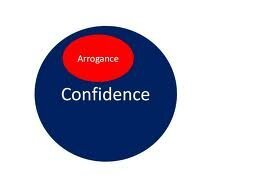
Confidence vs. Arrogance

One of the most common issues people bring in therapy is lack of confidence. Whether it’s confidence in themselves or confidence in doing something. And that is generally closely linked with a lack of self-esteem.

What’s the difference between self-esteem and self- confidence? My interpretation of it is that self-esteem is the ability to recognise one’s qualities, and self confidence is the ability to recognise one’s skills and abilities in doing something.

I often encourage my clients to first work on their self-esteem as I see it as the door to having more confidence. When I ask my clients how confident they feel on a scale 0 to 10, at first they rarely reach further than a 6 or 7 at the best. And when we explore what stops them from being confident up to a 9 or a 10, one of the first answer I get is “If I’m too confident I’m scared of becoming arrogant.” sounds familiar?

Therefore it’s quite important to explore the differences between arrogance and confidence. How would you describe the difference?

After having asked that question to many clients and to my NLP course students over the years, I noticed that the difference can be summed up in a simple statement: Being arrogant is stating your strength and qualities whilst putting down the interlocutor, whilst being confident is simply acknowledging your strength and qualities. Hence the main difference between being arrogant and confident is the intention behind the statement you make.

In my next post I’ll share some tips on how to boost your self-esteem and your self-confidence, but in the mean time, I’m interested to hear your thoughts on that topic; Do you have another way to explain the difference between the two? I’m looking forward to engage in a fascinating discussion with you, so please drop me a line in the comment section!

Do you want to play the Unconscious mind game?

There’s a challenge I’ve been facing quite often when working with the unconscious mind using NLP and hypnotherapy. As I mentioned before, I use hypnosis as a door to the unconscious mind, because I’ve found that engaging that part of our mind in making changes is much more effective than just working at the conscious level.

Coming back to the 81 years old client I was telling you about last time, I learnt something very important whilst working with her recently. One of the very powerful processes of NLP-hypnosis is the Part integration process. It addresses the unconscious mind to find the positive intention behind an unwanted behaviour and helps to solve the internal conflict the person is experiencing, between the part of them that’s creating the unwanted behaviour, and the part of them that doesn’t want to have this behaviour any more.

Unlike some NLP practitioners, I like to perform this process under trance, as it allows a deeper connection with the unconscious mind thus deeper changes. So the first time I applied this process with my client, I faced an issue that is quite common. Instead of allowing her unconscious mind to communicate with me, she was only giving me conscious responses. Which can undermine the success of the treatment as we’re not treating the issue at its source. I applied my usual tricks but nothing seemed to work. It can be helpful to get conscious replies, don’t get me wrong, but it doesn’t necessarily solve the problem, especially when like in this case, the issue is deeply rooted in the unconscious mind.

As a result, my client improved, but either the changes didn’t last nor were they significant. At first, I couldn’t figure out what was going wrong, but quickly I realized that being from an older generation and a different culture she didn’t really grasp the concept of the unconscious mind. I then decided to use some more “rational” processes such as submodalities shift or changing her strategies and we then got some brilliant results. However there was always a little part of her that she couldn’t control and that would escape from the brilliant set of NLP tools I was using.

I then asked myself “how can I get her to get familiar with unconscious verbal communication”? It’s quite a tricky one as it is, in essence, unconscious…So I made her do this funny exercise inspired from a game I saw in a famous TV series…I asked her simple questions and she had to answer with the first thing that came to her mind. That way she got familiar with how it feels to let the unconscious mind speak first and since then we’ve managed to do some deep part and core transformation processes!!

Moral of the story? never underestimate the resources of TV series… ;-)

Motion sickness

A lady came to see me back a couple of years ago as she was suffering from travel sickness whenever she was in a car or a bus. We explored in details where this issue came from and it appeared that when she was a teenager, she got in a car accident with her boyfriend, who was a very unsafe driver. Since then she had started developing those uncomfortable reactions when being in a vehicle.

When taking her history, it seemed that we needed to work in depth with this part of her that was obviously generating those unpleasant reactions so I chose a part integration process.

Starting from the NLP presupposition that behind every behaviour there’s a positive intention, whilst in trance I facilitated my client understanding that she created this part a long time ago in a situation in which she needed some help from her unconscious mind. When asking that part how old it was when it was created, unsurprisingly the number 19 came up and related to the car accident we had previously elicited.

It turned out that the positive intention of this part was to protect my client from getting in physical danger, and as it was quite an emotional trauma her unconscious mind created this reaction simply to protect her from getting hurt.

The problem seemed to be that this part got stuck into this protection mechanism, and twenty odd years later didn’t serve its purpose any longer; instead of protecting my client, it was impairing her life now that she had to drive to work everyday. So we worked on actualizing this part and integrated it with the other part of her that wanted to be comfortable in the car, whilst calibrating the submodalities of each part as we moved along in the process.

My client reported happily a few days after that the symptoms had completely disappeared, but was also amazed that the ear infection that she had been having for the past few months also cleared up… That shows how the mind and the body are connected, and how surprisingly some symptoms that seem unrelated stem from the same source as other patterns.

This lady came back to see me few months later for some help with fertility issues, and confirmed happily that no longer suffered from those debilitating symptoms. And she felt pregnant after our second treatment, but I’ll tell you about that in another post!


Russian dolls

I was reading a blog this morning on NLP and they mentioned how a lot of practitioners don’t know what process or technique to use with their clients. Because they are focused on the processes rather than being focused on the person’s needs.

When I train my Person Centred NLP course, I remind my students that I’m only teaching them those NLP processes so they can later on draw on them or even more importantly use only part of them to match the needs that their clients bring into the session.

This morning my client came in requesting my help to deal with her recent break up. She was still hanged onto the guy, felt angry with him and didn’t feel she could manage alone to move on. So I thought of doing a couple of grieving processes, such as the De-cording one (invented I believe by Connirae Andreas) as well as a lovely process I call The Cloud that involves identifying what the person got from the relationship and access those resources in a more direct way.

In the middle of the decording process, my client got stuck in her anger for her ex, and decided she needed to let go of that feeling before being able to move further. So I drew part of Dilts’s reimprinting process, giving her inner representation of her ex-boyfriend the resources he was missing in order to be able to symbolically handle the break up the way my client needed.

But as soon as that part was dealt with, she got in touch with the remnant of a limiting belief we’ve addressed last week, that she is not worthy of love. We had performed a lovely reimprinting process on that belief in our last session, got some amazing shifts, and she just needed to recall the new empowering words of her Dad that we had created during that process.

We then went back to the decording process and she felt she couldn’t let go fully of her ex. Because this time she needed the grieving Cloud process, even though I had planned to do it after the decording. So off we went into the Cloud, in order to finish the decording, using bits of reimprinting here and there.

I finished the session future pacing my client, and that’s when we realised she needed to do the re-cording bit of her decording process with the symbolic future man of her life. So we worked on her future timeline, linking her with her new potential partner whilst finishing the future pacing.

I felt I was playing with russian dolls all along integrating one process in another, and my clients concluded the session feeling much better and able to let go of her past relationship. I don’t believe she would have been able to go there so quickly if I had only used a standard process the way I had been taught. It’s a little bit like juggling, you need different balls in order to make it work.

Let me know your thoughts on which processes you find useful to combine for the good of your clients!

7 ways to better communicate in relationships

As I was telling you in my previous post, personal journeys can affect relationships. I have witnessed a lot of people embarking on a deep meaningful path and soon after breaking up with their partner. Fortunately, it doesn’t necessarily have to be that way, and NLP provides some great tools to improve your relationships.

Here are a few tips that can be useful for a better communication:

  1. When talking about the issues with her husband, the client I was telling you about in my previous post was complaining that he never asked how our sessions went. She said I know he doesn’t ask how my session went because he doesn’t care”. Her husband actually never stated those words, and she simply projected her deepest fears onto him. I challenged her by asking if she thought it was possible that there was at least one other explanation to why he wouldn’t ask. And of course, she realised that he might simply want to give her privacy; or that he was forgetful; or he was scared to ask in case she wasn’t care on sharing… You get the picture :-) Mind reading can be deceitful and lead to conflicts. When you hear yourself talking in this way, make sure you’ve got hard evidences to support your statement. Or more likely, start to wonder what other explanation there could be for their behaviour… Continue reading

5 ways to make better decisions

Do you find it sometimes difficult to make decisions? Have you ever been thinking that on one hand you would like to do something…but on another hand, there might be a better option?

Today one of my clients looked very stressed when he arrived at our session; He was buying a flat and had to choose between two possible options. Lots of money was involved and naturally he found it very difficult to make the right decision.

My first step in those situations is to find out what stops people from making a decision; to elicit some limiting beliefs or potential deep engrained patterns. And most of the time, as it was the case with this client, the reason they struggle is the fear of making a mistake and having to face the consequences.

So here are a few tips I use to help myself and my clients in those situations:

  1. Pros and Cons: The traditional approach of making two columns for each choice you’re contemplating: one for the pros and one for the cons. Writing it down might already help you getting some clarity about why you’re hesitating.
  2.  An opportunity to learn: Rather than worrying about making a mistake before and then worrying about having made a mistake after, you could choose a different approach: You could remember that mistakes are inevitably parts of our lives and also represent an opportunity to grow and learn. Perhaps the choice you’re about to make will turn out not to be the best one in the long run. But in the meantime and whilst you don’t know fully the outcome just yet, you will have learnt some valuable information that will allow you to make more informed choices in the future.
  3. Future pace: Sit comfortably and close your eyes. Take yourself into the future, having chosen your first option. What does that look like? How does it feel to have made this choice? What opportunities did that bring in your life? Now, come back to the present and do the same with your second option. Which one do you feel more comfortable with?
  4. Descartes quadrant: Being French and having studied mathematics, I can’t help using the wonderful NLP tool that Descartes quadrant is :-) It looks like this:

• In the first quadrant, ask yourself: what happens if I do it?
• In the second quadrant, ask: what doesn’t happen if I do it?
• In the third quadrant, ask: what happens if I don’t do it?
• In the fourth one, ask: what doesn’t happen if I don’t do it?

For example my client answered the following whilst contemplating buying the flat on the top floor:

• What happens if I do it? I get a wonderful view
• What doesn’t happen if I do it? I can’t save money as this one is more expensive than the other one
• What happens if I don’t do it? I have money to buy a car
• What doesn’t happen if I don’t do it? I’m not going to be able to have barbecues on the roof

And according to his hierarchy of criteria and values, he managed to decide what was the most important for him and make his choice congruently. Even though the process is simple, I’ve found that whilst writing down the answers people tend to get a strong sense of what they actually really want to do.

5. And finally, listen to your gut instinct Most of the time there’s a feeling deep down that guides you towards the right decision. Locate this feeling in your body, where do you feel it the most? What texture is it? What image or colour is associated with it? In which direction does it move? It can be very useful to learn to recognise it for the future to help you know what’s right for you. I must say I make almost all my decisions based on my gut instinct!

I hope this is useful, and feel free to drop me a comment with your thoughts and ideas on that topic!

I don’t want to see you anymore: I’m happy

I’m very pleased to say that this morning I saw one of my client for the last time. The reason being that this person first came to see me a few months ago because he was suffering from depression. We looked in depth of what was going on for him and discovered that his past was haunting him, leaving tracks of very limiting self-beliefs, low self-esteem and poor self- worth.

As I mentioned in my previous post, I started working with him asking what was depressing him, to pinpoint his issues concretely and find the right path of action. I also taught him how our language can have a strong impact on our inner world. For example, how saying “I don’t want to be depressed” can be detrimental. The unconscious mind doesn’t process negatives, so if I tell you “Don’t think of an apple” what did you just think about?! So when you keep saying “I don’t want to be depressed” your unconscious mind keeps hearing “I want to be depressed“. Scary, hey?!

As I talked about previously, our neuro-pathways are deeply engrained and depending on how we use them, they get reinforced or weakened. When you express what you want by actually stating what you don’t want, you’re actually involuntarily reinforcing what you’re trying to get away from. Continue reading

Losing weight with NLP

Summer is almost here, as the weather shows…finally! So you might have planned some sunny holidays soon, and it’s time to think of getting in shape to parade on the beach :-)

I often hear people talking about dieting a few weeks before going on holidays. And perhaps, you’ve noticed as well that diets don’t really work…Because eventually, you’ll put back on the weight, and will have to do another diet before your next holiday before you put on weight again etc. You get the picture.

With NLP, I’ve found a very good way to avoid turning into a yo-yo and staying fit all year long. Because it’s not about dieting, it’s about having a different lifestyle. So how can you use NLP to make sure you stay on track and healthy most of the time?

  1. Set your goal: specifically, what is your ideal weight? Instead of focusing on how much pounds you want to lose, which might be discouraging, I suggest you focus on the weight you want to achieve instead. Focusing on a positive outcome will indeed motivate you much more.
  2. Take a moment to think of the following: How will you know concretely when you’ve achieved your goal? How will it feel? What will you be saying to yourself? How different will you look?
  3. Examine your current food intake: perhaps get a food diary to keep track of what you eat. Are you eating a lot of processed food? Refined sugar? Carbs? What is the food you recognise as not contributing to you being fit? Once you’ve made a list of the non-healthy food, make a list of what food you would like to eat more of instead. That can include vegetables, protein, fruits…
  4. Use the brilliant NLP tools that are the Swish or changing Submodalities, to start shifting your tastes; you’ll train your brain to want more of the healthy food whilst disliking the junk food.
  5. What about your exercise pattern? Are you exercising regularly? If not, what’s stopping you? Lack of motivation? In which case I recommend doing a spatial anchoring process to get yourself in an exited and dynamic state when thinking of your next session at the gym. I find the spatial anchoring is more effective than a normal anchoring in this case, as you’re actually creating bigger changes at the  physiological level as well as in your mind.
  6. Sometimes there are some deeper underlying causes to over-eating. It may cover up for emotional emptiness, anxiety or even anger…you could use a parts process or a core transformation to discover your hidden secondary gain, and gently allow it to update and resolve. If you’re interested in those processes, feel free to check my previous post on that topic.

I found the combination of those techniques very effective on myself and on my clients; as the brain learns quickly, you might find you’re going to progressively and effortlessly get into a healthy routine. One of my clients from a couple of years ago managed to lose two stones in a month and reported that he didn’t even have to sacrifice anything, he said “it’s as if my tastes had changed”.

I recently bumped into him in the local supermarket and was delighted to see he was still slim and fit! He was beaming when he told me how easy it was for him to stay healthy.

So enjoy those tips, and I’m looking forward to hearing how quickly you’ll shift your eating habits and look wonderful in your swimming suits!


What is depressing you?

One of my first step when working with depression is often reframing the issue and challenging the nominalization.

What is a nominalization? it’s a term developed by the creators of NLP, Bandler and Grinder that describes how an action has been transformed into a noun. Such as the action of failing, that became the noun “failure”. The ultimate way to figure this out is to use the wheel barrow test: If you can’t put it in a wheelbarrow it’s a nominalization!

What’s the point in spotting nominalizations? When you transform an action into a noun, it gives it permanence and a solid existence independently of you. And when you say “I’m a failure” It defines your identity rather than your behaviour (I failed at something). An action on another hand completely depends on you, as you’re the person performing it, therefore you’re the one who has got control over it. Continue reading

NLP or Hypnotherapy?

I often have been asked the question “what is the difference between NLP and Hypnotherapy”? It is actually quite difficult to answer as they aren’t easily defined and there are multiple ways to look at hypnosis and NLP. But I’m going to intend clarifying that by sharing with you my understanding and my experience of it.

Hypnosis is a technique that generates an altered state of consciousness in which the unconscious mind is more available to respond to change. And Hypnotherapy is a therapeutic approach that uses hypnosis. Let me quickly shed light on the difference between hypnotherapy and stage hypnosis actually as there tends to be an unfortunate confusion here. The reputation of hypnosis comes from the latter, which has got an entertainment purpose. It uses hypnosis in a manipulative way in order to generate some unusual behaviours. On another hand, a hypnotherapist uses hypnosis in an ethical way, within the control, permission and full awareness of its subject. So during an hypnotherapy session a client will never do something he doesn’t agree with or doesn’t want to do.

As for NLP, it is a set of great tools that uses language to generate changes at the neurological level. NLP can be used in transformational coaching, in education and youth coaching but also to improve communication, in business, sales and in many other areas. Continue reading

Learn to love your inner child

I’ve recently read a very interesting article by Andy Hunt on how what we learn as children is totally orientated towards our survival and safety. That got me thinking on the parts integration process I was talking about in my previous post and the origins of those parts we so often try to fight on a daily basis.

What struck me the most in this article, is to realize that as children we are totally suggestible to the influence of our primary care givers. Not only do we model them, their reactions to certain stimuli and their behaviours, but we completely absorb their values and beliefs because we haven’t had enough time yet to build our own.

As Andy says, if you’re lucky you’ll have been raised in a balanced and supportive family. But how many of us can say they have never faced criticism, rejection or any other negative patterns whilst growing up? which means that you’re likely to have developed some limiting beliefs about yourself, perhaps internalized your care givers critical voice, or unconsciously learnt some destructive behaviours that are still at play in your life today. Continue reading

Do you want to have your cake and eat it at the same time?

Have you ever found yourself in a situation where you want something but there’s a part of you that gets in the way? Such as having lots of work to do but procrastinating on social media instead?! Or being on a diet and not being able to resist that chocolate cake?! I certainly do! (especially the chocolate cake one…)

Isn’t it intriguing that we do things that we know aren’t good for us and yet we do them anyway? It’s as if there was this part of us that we don’t control but seems sometimes to be in charge of our reactions and emotions…

There’s a brilliant NLP process called Parts Integration that addresses those inner conflicts. One of the things I really love about this process is how imaginative and elegant it can be. I have mainly seen this technique performed quickly, as it is indeed possible to resolve that type of conflict swiftly. But I found that by giving it a more meaningful approach, the changes my clients were getting were more profound, more significant.

I was working once with a person who suffered from travel sickness and found it very debilitating as he had always dreamt of being an airline pilot. We started to look into the part of him that was producing the symptoms and he realized he had created this part when he was a little boy. He had been stuck in a traffic jam in a car with his dad who was verbally very abusive. As a child he found this situation so unbearable that his unconscious mind started to develop this physical reaction as a coping mechanism. I must say It was actually fascinating to see such an example of mind-body connexion…

So when my client started to understand where his issues came from, it produced a very deep shift and he burst into tears, remembering the despair and pain he had experienced as a child. But as we progressively unravelled the thread of his subconscious, he recognized this part of him was only trying to protect him, and then he was able to develop some compassion and love towards himself. I was very moved by how this person managed to connect deeply with the child within, and I discovered how NLP can sometimes be connected with some other models of therapies, such as transactional analysis in this case. And I realized that through helping people to connect and communicate with the deep parts of themselves they’ve been rejecting for years, some amazing changes can take place that go beyond a simple conflict resolution.

My client called me a few weeks later, thrilled to announce he had started his training as a pilot as he was no longer experiencing any of the symptoms he had been suffering from during the last 30 years…he’s today working with one of the biggest airline company and I will always remember the face of the boy in tears in front of me as he was reconnecting with such an important part of his history…

So I’m wondering, what inner conflict are you currently experiencing that is getting in the way of what you want to achieve?