-
Cellular healing
Nov 15, 2012 I was recently reading Deepak Chopra’s book Quantum healing that gives a lot of food for thoughts, especially regarding the cellular healing work I do combining integrative NLP and Hypnotherapy.
There’s an inner intelligence in our body, which makes it so structurally perfect. It’s that intelligence that knows when to produce the hormones and chemicals we need when we need them. Take the flight or fight response. How does the body know how to produce adrenaline and cortisol in the exact amount you need to respond optimally to a threat? When you’ve got a virus, how does your immune system know to send T-cells to identify and destroy the intruder, and furthermore to flag it to recognize it in case of future attacks to protect you better? When you look at the complexity of our bodies and yet the perfect mechanism that keeps it functioning, it is very hard to believe it’s all happening “by chance”, isn’t it? There must be an inner program that makes sure all of it runs like clockwork. That’s what Chopra describes as our inner intelligence, and that’s what NLP calls the unconscious mind. When you look at the primes directives of the unconscious mind, you will find the one that reminds us that it is in charge of running and preserving the body.
Based on the study of our physiology Chopra explains that our body regenerates itself completely every year. Some other sources claim that it happens every seven years. In any case, it means the cells of our ENTIRE body get totally renewed at the worst, every seven years. Structurally, it simply means we are not the same body we were a few years ago. Which raises an interesting question, if our body gets totally replaced at the cellular level, how do people manage to carry non genetic illnesses and diseases for a longer period of time? According to Chopra, less than 5% of cancers are genetic. So how does the body manage to re-create cancer cells that are not programmed in our DNA when those ones have been totally wiped off by chemotherapy?
Chopra introduces the idea of phantom memory. Physicists often talk about muscle memory, where the body learns and remember repetitive tasks we perform. Walking, riding, playing a musical instrument or driving are a very good example of it. Not only do you remember how to do this at the neurological level, but your body also remembers the movements associated with the task, in order to make it easier to perform next time.
However there seems to be another type of memory in our mind and body. A kind of immaterial memory that contains information that gets transmitted to our cells and triggers old physiological responses even when all the cells that used to be deficient have long disappeared. I’m talking about cancer type of illnesses, or even chemical addictions. Where does this memory come from? Our past, our experience, of course. But how does all this chemically alters our body? How does the mental message gets translated into a chemical reaction? There aren’t yet any satisfactory scientific explanation for that.
However I strongly believe that the unconscious mind plays a major role into this process. It is where memories are stored, and it is what controls our body. Therefore it must be the missing link between thoughts, emotions and physical reactions. So if the unconscious mind has got the power to change the chemical structure of our body, what would happen if we reprogrammed the messages the unconscious mind follows? What would happen if we could instruct the unconscious mind to heal the body instead of creating illnesses?
That’s where hypnotherapy and NLP, among other techniques, come in. They allow a direct communication and reprogramming of the unconscious mind, therefore opens up the possibility for cellular healing. I’ve done major work on chronic illnesses, and so-called incurable diseases and observed some very promising results; whether curing an allergy, recovering much quicker from the flu or even working with cancer, M.E or Crohn’s disease. And I’m hoping to continue my exploration of this fascinating field and keep pushing the limits of the possibilities of cellular healing.
-
Counselling or NLP therapy?
Oct 23, 2012
Why would you choose NLP therapy rather than counselling or psychotherapy?
Most clients I see in my practice bring up issues that could very well be treated via traditional therapy. Such as stress, anxiety, low self-esteem or even depression. In most cases, it only takes a few months for their symptoms or issues to be completely solved using integrative NLP and hypnotherapy processes. So how come it generally takes much longer with traditional therapy?
The main focus of counselling or psychotherapy sessions is on the issues. Where they come from, what caused them, what are the emotional roots as well as analysing the impacts they have in one’s life. However, once you’ve done this work, where do you take it from there? How do you go from understanding the root causes and impact of your issues to solving them? Who has ever stopped smoking, lost significant amount of weight or cured a strong phobia by only talking about it?!
In my personal experience of counselling, after having analysed the ins and outs of the issues I’ve been often told “You can’t solve your issues; You can only learn to live with them”. And I strongly disagree. Those are beliefs that were appropriate perhaps in the early days of therapy, but nowadays, with the incredible development of new approaches and alternative therapies, I don’t believe there is such thing as an impossibility to resolve an issue. Don’t get me wrong, it might only be a belief, but at the end of the day, what is most useful? To believe you can’t resolve your issues and you merely have to live with them and reduce the damages they have in your life, or actually believe there’s a way to totally free yourself from them? I know what my clients who completely recovered from chronic fatigue, M.E or depression would say…
Counselling and Psychotherapy can be very useful however. Sometimes people don’t feel happy but they have no idea why. In those situations, it can be extremely helpful to get the support of a qualified therapist to shed light on what is causing those negative feelings. And most of the clients who walk into my practice actually already know the reasons of their uneasiness, whether they’ve done some previous therapy work or by analysing it themselves. Which makes our treatment much easier and faster than if we had to start from scratch.
However, analysing and understanding one’s issue has never made it fully disappear. It’s like saying that when my car broke down a few weeks ago, simply knowing that the clutch wasn’t working any more because it was rusted was enough to magically make it work again. I obviously needed to do something about it, go to the garage who has the tools to repair the car…and that’s exactly what NLP provides. Once you understand where your issues come from, you need the tools to solve them. And NLP and hypnotherapy are among the most effective ones I’ve encountered to so such thing. Oh, and by the way, you don’t need to spend years and years in therapy either to sort yourself out…:-)
-
5 steps to avoid being overwhelmed
Oct 6, 2012 The reason why you haven’t seen many of my blogs recently – and apologies for that – is because in the past few weeks I was working between France and England. In France, I was running seminars and coaching sessions for people suffering from chronic illnesses. Back in UK, I was working with my NLP/hypnotherapy clients, training my Person Centred NLP/H courses and performing music concerts at the weekend. I must say that I’m often asked “How do you cope with so many things to do?” And I’ve realized I’ve developed a strategy to avoid being overwhelmed.
To start with, I go back to the basics and make sure I sleep enough, I eat healthily and get enough exercise. I’ve used the NLP spatial anchoring technique to motivate myself to exercise, submodality change work and the Swish to alter my food taste in order to have more healthy ones. I also make appointments with myself in my diary to go swimming and meditate, as that gives my unconscious mind the message that I am, and my health is as important as the other areas of my life.
And finally I make my “to-do” lists. The first list I make is a monthly one. At the beginning of each month, I write down what my goals are for the next 30 days, whether is preparing my new NLP course, or the next Smart School exiting transformational future workshop, doing my tax return, reading that book I meant to read for ages, or writing my blog.
Then I chunk down this monthly list into a weekly one. For each task, looking at all the steps I need to take to complete the task. I schedule them in the week looking at my wall calendar, deciding realistically how long each task will take and when is the best time to do it during the week. I then write it down in my diary.
Finally I chunk that list down into daily tasks, reviewing it each night to fine tune it according to what is left to do. So I’m going to sleep having written down my to-do list for the following day, which takes it off my mind and allows me to go peacefully to sleep, avoiding insomnia based on the worry of so many things to do.
The following morning, after having had a healthy breakfast and meditated, I look at my to-do list and get ready to start work. Now, I don’t know about you, but I am brilliant at finding excuses to delay starting work. Social media, needing a break, having to check this important thing on internet, feeding the cat…so I’ve created a great way to avoid falling into this trap: I do the NLP perceptual positions on myself. The first position, is me being my own boss. That’s when I decide which tasks need to be accomplished and by when. The second position, that I take every morning, is me being the employee who’s been asked to perform a task. Because in reality, the main reason that prevents us to do what we are supposed to do, is because we give ourselves the choice, don’t we? So I simply step into the shoes of someone who doesn’t have the choice. An employee whose boss requested a task.
So here are a few tips to cope with being overwhelmed:
1. Write down every thing that needs to be done
2. Write down all the necessary steps for each task
3. Looking at your diary, decide when you can realistically start working on it making sure you stay balanced as much as possible
4. When working on one task, only focus in that one thing, knowing you’ve concretely planned already for the rest of it to be dealt with later. Meditation does help to stay focused in the here and now rather than worrying about what’s next to do.
5. Regularly take some deep breath to relax your body and oxygenate your brain making sure your keeping your concentration levels at their peak.
Hope that helps! Please let me know your strategies to handle too many things to do by dropping a comment below!
-
When the NLP fast phobia cure doesn’t work
Sep 21, 2012 Richard Bandler put together his fast phobia cure a few years ago and supposedly in 10 minutes manages to free people from their phobia. In my experience however – and the one of a few of my NLP colleagues, it’s rarely that straight forward.
The brain learns and change very quickly, therefore it’s indeed essential to do some processes in a high-speed as it’s the key to destabilize old running patterns. A lot of clients get rid of their phobia with a basic NLP approach, however sometimes a client might need a few different processes to completely overcome the complexity of their phobia.
Today I saw a client with a spider phobia, and on our first session I mentioned I had a plastic spider in my bag. She panicked and was on the verge of tears at the thought of it. Considering the extent of her phobia, I chose to do first a part integration process in order to address her secondary gain – protection – that appeared to be very strong. If you don’t address the secondary gain before doing the phobia cure, it’s likely not going to work or last.
After the first session, she felt more comfortable but still was quite terrified. On the second session, when I mentioned getting my plastic spider out of my bag, her unconscious communication clearly signalled that she wasn’t ready for it. So I did the phobia cure on her – the normal version, not the fast one, and at the end of it she felt better but I could tell she wasn’t totally sorted.
So I saw her today for the third time. She had managed to stay in the same room as a spider during the past week and her reactions were much less dramatic. So we looked into her unconscious strategy to create the phobia and more specifically her internal visual representation of a spider. And as I suspected, it was completely distorted and exaggerated. The spider was oversized, very close up and out of context, i.e there wasn’t any background in the picture. So we installed a new strategy based on the one she unconsciously uses with insects she’s fine being around, whilst using anchoring and pattern breaking. At the end of the session, she asked for my plastic spider and spent 20mn playing around with it!
Every client is different, all patterns are different, and processes are only crutches to help you help your clients. And the key – and the principle behind NLP – is to first understand the structure of your client’s internal patterns before knowing how to start changing them.
-
Feeling safe
Sep 14, 2012 When I trained to be an NLP practitioner, I’ve been repeatedly told to watch out for clients wanting to be safe, secure or protected; those outcomes are ill-formed in the sense that they unconsciously trigger the question “safe/secure/protected from what?” therefore drive the client to access the very negative thing they’re actually trying to run away from. I think that’s a very important point when you’re gathering information during your case history.
So for many years when I was doing a part integration or a core transformation process, when my client came up with those outcomes in the positive intention chain, I made sure I moved them towards a more positive outcome.
Until Jane came into my practice. Jane’s history is one of physical and sexual abuse in her childhood, and she had been understandably deeply affected by that all her life. I spent a few months working with her until we could even begin addressing the abuse issues, and one day we were doing a core transformation process and during the elicitation of the intention chain, Jane kept looping between safety, security and protection. I didn’t manage to bring her to a higher level and that’s when it hit me.
For survivors of abuse, actually, safety is one of the key outcome. Because as a child, safety is one of the first fundamental need, and when you’re a victim of that kind of trauma, it’s taken away from you. And no matter if it’s an ill-formed outcome for some NLP practitioner, I’ve learnt with Jane that even before you can aim for higher or more positive core state, you need to help your clients to fulfil this essential need that wasn’t met as a child.
This realisation helped me to change my approach. I still agree that safety, security and protection are what some people call sometimes “away-from” and I do challenge them in my coaching sessions or whilst eliciting the well-formed outcomes.
However it’s a completely different matter when addressing trauma and abuse, and I do stress the importance once again in focusing on your client needs when appropriate, over following some rules you’ve learnt during your training. As sometimes, like in my experience, you could miss out on the key element that could make all the difference.
So when working on those issues now, I tend to first start with fulfilling those unmet needs with some re-parenting using a transactional analysis approach for example, and a lot of timeline work or rewriting the past before moving my client to higher outcomes using some more traditional NLP and Hypnotherapy techniques. I found that it is much more effective in creating deeper and significant changes. Have you had similar experiences? let me know your thoughts!
-
Quick fix or temporary fix?
Sep 2, 2012 One of the common theme I find when looking at the NLP world is the quick fix approach. I was reading today a blog by one of the most respected NLP pioneer, Steve Andreas, on resolving hate and anger. And his first case study got me thinking, once again, about the danger of the quick fix NLP approach.
Through changing submodalities, Steve Andreas helps his client to change the unwanted submodalities of the angry image and voice to the most resourceful ones. And get a pretty good result in a very short period of time. However, when he checks on his client a few weeks later, Fred reports that he hasn’t been able to maintain the changes in relation to his father. And Andreas to conclude that sometimes the sessions reveals “some other aspects of the problem that need to be addressed.” I totally agree with that conclusion.
The problem being that a lot of the time, clients won’t get back to you if the process hasn’t worked, or won’t have the courage to admit it didn’t work if you’re thorough in your following up with them. And most practitioners anyway don’t follow up on their clients. So they’re left believing they did a wonderful job with their clients during the session when actually, they only witnessed a temporary shift.
In the person centred approach and in my own practice, I insist in taking the time to get to know my clients well, to build rapport, to take quite a deep and profound case history before even moving on to the processes. Not only do I do this to gather more information, but also to get a sense of who my client is. To learn to read their non verbal communication. To build the trust, so that if the processes don’t work on them, they’ll feel confident enough to let me know so we can improve their situations.
In addition, there’s something else that I feel is worth reflecting on. I know that NLP is a solution-focused approach and not a problem-focused approach like other traditional therapies. However, when someone comes in with deep anger issues, and in the pure NLP style you only focus on changing this anger with submodalities or parts integration, you might miss out on the core of the problem.
I believe feelings are here for a reason. I believe they’re here to tell us about boundaries violation or unmet needs, for example in the case of anger. And wanting to cure the anger too quickly might prevent you to work on the real issues, which would be deeply rooted in the past. And in my experience, at the end of the day, you’ll eventually have to come to work on those roots otherwise the changes won’t last anyway.
So rather than running away from the root causes and quickly move on to finding solution, why not actually taking the time to learn about what happened? Not in too much details, of course, as we don’t want to reactivate the neuro-pathways linked to the problem. But enough so we can work directly on the core issues and by doing so perhaps sorting out the issues quicker than spending weeks trying to work on changing the behaviour rather than healing the wounds…
Which means that instead of only working with submodalities, you might need to explore deeper processes, like reimprinting, core transformation or time line therapy. Whilst combining if needed Gestalt chair work with re-parenting the inner child using a TA approach. And that’s the bit of therapy I’m so interested about. All those brilliant processes you can integrate to the existing NLP approach to go into the depth of the human complexity, into deep root causes and start to help create amazing lasting changes.
-
5 tips to boost your self-esteem
Aug 27, 2012 Having explored the difference between confidence and arrogance in my previous post, and hopefully having helped you to accept the idea that’s is ok to become more confident, let’s look today into how you can increase your self-esteem and self-confidence.
1. Make a list of your qualities and achievements. For example, writing down that you are kind, funny or creative. And recognising achievements such as graduating from school or passing your driving test. Even though those qualities and achievements might seem to you as trivial, they still represent what you are good at. No matter if they are common skills or attributes. When you look at your flaws, you probably don’t dismiss them because others have it too; do you?! So why would you do that for your qualities?!
2. Ask people you love and trust to give you a list of the qualities they think you have. You might be surprised on how much more positively people who love you see you than you see yourself…
3. Look into the negative beliefs you have about yourself, such as “I’m not good enough”, “I’m not loveable”, “I don’t deserve being (successful, happy etc…)”. Where do those beliefs come from? What negative messages have you received as a child and from whom? Start to look for counter evidences for those beliefs in your everyday life, such as for example what you’ve already achieved that show you are indeed good enough. Or how many people love you that prove that you are indeed loveable…
4. Take one of this limiting beliefs and ask yourself: what would it take for this belief to be false? For example, taking the belief “I’m not loveable”. What would it take for anyone to be loveable according to your criteria? How can you then relate this to yourself?
5. Finally if those beliefs are deeply engrained, ask an NLP master practitioner to help you sorting them out. There are many brilliant processes that can help you re-program your mind to get some more positive and useful beliefs.
I hope that helps, looking forward to reading your feedbacks!
-
Confidence vs. Arrogance
Aug 15, 2012 One of the most common issues people bring in therapy is lack of confidence. Whether it’s confidence in themselves or confidence in doing something. And that is generally closely linked with a lack of self-esteem.
What’s the difference between self-esteem and self- confidence? My interpretation of it is that self-esteem is the ability to recognise one’s qualities, and self confidence is the ability to recognise one’s skills and abilities in doing something.
I often encourage my clients to first work on their self-esteem as I see it as the door to having more confidence. When I ask my clients how confident they feel on a scale 0 to 10, at first they rarely reach further than a 6 or 7 at the best. And when we explore what stops them from being confident up to a 9 or a 10, one of the first answer I get is “If I’m too confident I’m scared of becoming arrogant.” sounds familiar?
Therefore it’s quite important to explore the differences between arrogance and confidence. How would you describe the difference?
After having asked that question to many clients and to my NLP course students over the years, I noticed that the difference can be summed up in a simple statement: Being arrogant is stating your strength and qualities whilst putting down the interlocutor, whilst being confident is simply acknowledging your strength and qualities. Hence the main difference between being arrogant and confident is the intention behind the statement you make.
In my next post I’ll share some tips on how to boost your self-esteem and your self-confidence, but in the mean time, I’m interested to hear your thoughts on that topic; Do you have another way to explain the difference between the two? I’m looking forward to engage in a fascinating discussion with you, so please drop me a line in the comment section!
-
It’s not you, it’s me
Aug 13, 2012 My client this morning brought an interesting dilemma. He was at work last week and one of his customer asked his opinion on other traders in the field. Having a nice rapport already with that regular customer, my client allowed himself to share his thoughts on that subject, which actually weren’t very positive…
On his way home, he got a bit worried, wondering if he had done the right thing in being so honest on that topic with a customer. He asked his girlfriend her opinion and she got very wound up and angry with him, criticising the fact that “he always talks too much”. My client was puzzled as her reaction seemed overly strong and felt very guilty about it all. He immediately asked me to schedule an appointment.
When John went into details about the story, it seemed he couldn’t find any controversy in what he had shared with his customer, as he was very careful in not mentioning any names and only giving a general opinion. Through some coaching, we quickly realised that John didn’t think there was an issue in him talking too much actually, he had simply adopted his girlfriend’s beliefs that he did something wrong.
Digging deeper it appeared that a few months ago, John had shared with his best friend that his girlfriend had previously suffered from depression. Justine got very upset as she understandably felt quite protective of this aspect of her life ; she probably felt betrayed in being exposed to a third party without her permission. And since that incident, she had been very sensitive every time John was openly sharing some information.
That was quite a breakthrough for John as he actually realised that her criticism had actually not much to do with him, but simply was showing the fact that his girlfriend had some issues – that can be very legitimate – around her depression and him sharing some private information. It is therefore important to recognise the difference between what others believe are right or wrong and what we stand for.
I’ve read a wonderful quote recently that sums up very well the dynamic of this pattern: “When people predict your doom, undermine your dreams or criticise you, remember they’re telling you their stories, not yours.”
We all have a different model of the world and our reactions to external events are bound to be influenced by our subjective perceptions. Our beliefs and values, our past experience and much more will shape how we interpret events and how we respond to them. So most of the time our reactions are merely the mirror of what’s going on in our internal experience rather than a detached response to what’s presented to us.
But too often we mistake the map for the reality and try to impose our beliefs on others by criticising them when they don’t behave according to our standards. Sometimes we may simply forget that they follow their values which are simply different from ours, but as valid…
Have you ever been in such a situation? I’m interested to hear your thoughts!
-
Do you want to play the Unconscious mind game?
Aug 9, 2012There’s a challenge I’ve been facing quite often when working with the unconscious mind using NLP and hypnotherapy. As I mentioned before, I use hypnosis as a door to the unconscious mind, because I’ve found that engaging that part of our mind in making changes is much more effective than just working at the conscious level.
Coming back to the 81 years old client I was telling you about last time, I learnt something very important whilst working with her recently. One of the very powerful processes of NLP-hypnosis is the Part integration process. It addresses the unconscious mind to find the positive intention behind an unwanted behaviour and helps to solve the internal conflict the person is experiencing, between the part of them that’s creating the unwanted behaviour, and the part of them that doesn’t want to have this behaviour any more.
Unlike some NLP practitioners, I like to perform this process under trance, as it allows a deeper connection with the unconscious mind thus deeper changes. So the first time I applied this process with my client, I faced an issue that is quite common. Instead of allowing her unconscious mind to communicate with me, she was only giving me conscious responses. Which can undermine the success of the treatment as we’re not treating the issue at its source. I applied my usual tricks but nothing seemed to work. It can be helpful to get conscious replies, don’t get me wrong, but it doesn’t necessarily solve the problem, especially when like in this case, the issue is deeply rooted in the unconscious mind.
As a result, my client improved, but either the changes didn’t last nor were they significant. At first, I couldn’t figure out what was going wrong, but quickly I realized that being from an older generation and a different culture she didn’t really grasp the concept of the unconscious mind. I then decided to use some more “rational” processes such as submodalities shift or changing her strategies and we then got some brilliant results. However there was always a little part of her that she couldn’t control and that would escape from the brilliant set of NLP tools I was using.
I then asked myself “how can I get her to get familiar with unconscious verbal communication”? It’s quite a tricky one as it is, in essence, unconscious…So I made her do this funny exercise inspired from a game I saw in a famous TV series…I asked her simple questions and she had to answer with the first thing that came to her mind. That way she got familiar with how it feels to let the unconscious mind speak first and since then we’ve managed to do some deep part and core transformation processes!!
Moral of the story? never underestimate the resources of TV series…

-
Believing in your clients
Aug 3, 2012 I’d like to share with you a case study that illustrates very well the person centred NLP approach, especially the fourth of the six Sufficient and Necessary Conditions for change inspired by Carl Rogers: That the practitioner believes unconditionally that their client can change from within. It also illustrates very well the NLP presupposition that says “you can’t not communicate”.
I’ve got a client who is 81 year old and wants to lose weight. She’s an absolutely incredible woman and has got an amazing energy and joie-de-vivre. In her quest for happiness, she’s decided to fight her binging pattern and to get fit. I must say that she’s not binging much and generally eats healthy food, but she ‘s unhappy not to be in control of herself in those situations.
After having checked that the changes she wanted were ecological, we started to work using different NLP and hypnosis processes. She started to change, and as I got to know her and her learning style, I discovered that in her model of the world, change had to come progressively and be reinforced regularly in order to last. So I adapted my processes in order to match her beliefs and we got very good results: she was gradually improving, reducing drastically the episodes of binging and being much more in control of her eating habits.
One day she burst into my practice with a huge grin on her face and before even sitting down started to tell me how happy she was, as she had just been on a cruise and completely controlled her eating pattern: not once did she have something unhealthy. As she told me about those good news, I couldn’t help feeling sceptical as it just didn’t fit with what I knew from her learning style, and I found quite amazing that she got suddenly such drastic and quick results when we had been working for months achieving baby steps. As I was contemplating all those thoughts, guess what happened? Well, my unconscious communication couldn’t have been more transparent.
And as soon as I realized it I tried to make up for it and consciously support and congratulate her as much as possible. But it was too late. My own beliefs had polluted her experience, and as we had created a great rapport over the months we worked together, she immediately picked up on it. And as a result, completely relapsed and went back to square one. What a lesson learnt!! It is indeed so important as a practitioner to leave your own beliefs and expectations at the door and offer unconditional positive regards to your clients!
Thanks to our good rapport however I managed to reframe positively what had just happened, but it took me another few weeks to get her back on track, as she had developed now the belief that she had failed therefore that she was never going to make it…She is now much better and much happier, and I’ve learnt something very important out of it. Clients are indeed your best teachers!
-
Motion sickness
Jul 31, 2012 A lady came to see me back a couple of years ago as she was suffering from travel sickness whenever she was in a car or a bus. We explored in details where this issue came from and it appeared that when she was a teenager, she got in a car accident with her boyfriend, who was a very unsafe driver. Since then she had started developing those uncomfortable reactions when being in a vehicle.
When taking her history, it seemed that we needed to work in depth with this part of her that was obviously generating those unpleasant reactions so I chose a part integration process.
Starting from the NLP presupposition that behind every behaviour there’s a positive intention, whilst in trance I facilitated my client understanding that she created this part a long time ago in a situation in which she needed some help from her unconscious mind. When asking that part how old it was when it was created, unsurprisingly the number 19 came up and related to the car accident we had previously elicited.
It turned out that the positive intention of this part was to protect my client from getting in physical danger, and as it was quite an emotional trauma her unconscious mind created this reaction simply to protect her from getting hurt.
The problem seemed to be that this part got stuck into this protection mechanism, and twenty odd years later didn’t serve its purpose any longer; instead of protecting my client, it was impairing her life now that she had to drive to work everyday. So we worked on actualizing this part and integrated it with the other part of her that wanted to be comfortable in the car, whilst calibrating the submodalities of each part as we moved along in the process.
My client reported happily a few days after that the symptoms had completely disappeared, but was also amazed that the ear infection that she had been having for the past few months also cleared up… That shows how the mind and the body are connected, and how surprisingly some symptoms that seem unrelated stem from the same source as other patterns.
This lady came back to see me few months later for some help with fertility issues, and confirmed happily that no longer suffered from those debilitating symptoms. And she felt pregnant after our second treatment, but I’ll tell you about that in another post!
-
Russian dolls
Jul 27, 2012 I was reading a blog this morning on NLP and they mentioned how a lot of practitioners don’t know what process or technique to use with their clients. Because they are focused on the processes rather than being focused on the person’s needs.
When I train my Person Centred NLP course, I remind my students that I’m only teaching them those NLP processes so they can later on draw on them or even more importantly use only part of them to match the needs that their clients bring into the session.
This morning my client came in requesting my help to deal with her recent break up. She was still hanged onto the guy, felt angry with him and didn’t feel she could manage alone to move on. So I thought of doing a couple of grieving processes, such as the De-cording one (invented I believe by Connirae Andreas) as well as a lovely process I call The Cloud that involves identifying what the person got from the relationship and access those resources in a more direct way.
In the middle of the decording process, my client got stuck in her anger for her ex, and decided she needed to let go of that feeling before being able to move further. So I drew part of Dilts’s reimprinting process, giving her inner representation of her ex-boyfriend the resources he was missing in order to be able to symbolically handle the break up the way my client needed.
But as soon as that part was dealt with, she got in touch with the remnant of a limiting belief we’ve addressed last week, that she is not worthy of love. We had performed a lovely reimprinting process on that belief in our last session, got some amazing shifts, and she just needed to recall the new empowering words of her Dad that we had created during that process.
We then went back to the decording process and she felt she couldn’t let go fully of her ex. Because this time she needed the grieving Cloud process, even though I had planned to do it after the decording. So off we went into the Cloud, in order to finish the decording, using bits of reimprinting here and there.
I finished the session future pacing my client, and that’s when we realised she needed to do the re-cording bit of her decording process with the symbolic future man of her life. So we worked on her future timeline, linking her with her new potential partner whilst finishing the future pacing.
I felt I was playing with russian dolls all along integrating one process in another, and my clients concluded the session feeling much better and able to let go of her past relationship. I don’t believe she would have been able to go there so quickly if I had only used a standard process the way I had been taught. It’s a little bit like juggling, you need different balls in order to make it work.
Let me know your thoughts on which processes you find useful to combine for the good of your clients!
-
7 ways to better communicate in relationships
Jul 23, 2012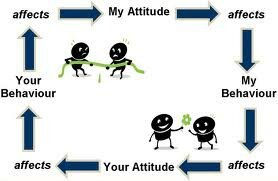 As I was telling you in my previous post, personal journeys can affect relationships. I have witnessed a lot of people embarking on a deep meaningful path and soon after breaking up with their partner. Fortunately, it doesn’t necessarily have to be that way, and NLP provides some great tools to improve your relationships.
Here are a few tips that can be useful for a better communication:
- When talking about the issues with her husband, the client I was telling you about in my previous post was complaining that he never asked how our sessions went. She said “I know he doesn’t ask how my session went because he doesn’t care”. Her husband actually never stated those words, and she simply projected her deepest fears onto him. I challenged her by asking if she thought it was possible that there was at least one other explanation to why he wouldn’t ask. And of course, she realised that he might simply want to give her privacy; or that he was forgetful; or he was scared to ask in case she wasn’t care on sharing… You get the picture
 Mind reading can be deceitful and lead to conflicts. When you hear yourself talking in this way, make sure you’ve got hard evidences to support your statement. Or more likely, start to wonder what other explanation there could be for their behaviour…
 - Have you ever heard someone saying something like: Every time I come home, he’s sitting in front of TV? This is a dangerous generalisation, as it’s very unlikely it happens every time and those words aggravate the issue instead of helping sorting it.
- I often hear the statement: He makes me angry. I’m intrigued: technically, how do people have the power to make you do or feel something? If it exists, I do want to learn it… People can only make us feel or do things if we implicitly agree to do so. NLP teaches us that we are in charge of our thoughts and feelings, so if you choose not to feel angry, well guess what? You have the power to do it.
- There’s one NLP presupposition that I find very useful in my interaction with people: “Every behaviour has got a positive intention”. So whenever someone says or does something that I struggle with, I remember that they must have a positive intention, either for themselves or for me. And if I find it, it might give me the key to move forward in solving the issue.
- Another great presupposition is “People respond to their experience, not the reality itself”. In relationships people can push each other’s buttons, and it’s very helpful remembering that most of the time when people react strongly, they’re likely to respond to an old pattern rather to what you just said. It helps putting things into perspective and not take their response too personally.
- NLP suggests that we all tend to have a preferred representational system. I remember hearing the story of a husband that kept leaving a mess in the leaving room, and his wife, who was very visual, was very bothered. But he couldn’t understand how it affected her, as he was himself very kinaesthetic. So when she told him that seeing the mess was like feeling crumbs in the bed, he immediately got the message and worked on changing his habits! That shows that it can be useful to learn what your partner’s preferred representational system is and use corresponding predicates to facilitate the communication.
- When you’re about to have a delicate conversation, pay attention to your body posture, keeping it open. Matching your partner’s behaviour unconsciously sends the message that you’re on their side and looking for agreements rather than arguments. Always start the conversation with stating how you feel and what is going on for you rather than blaming them. So in the example of my client, rather than starting the conversation by saying “You never ask how my session went”, that will necessarily trigger some defensive response, she could say “ I’ve noticed that we haven’t talked recently about my sessions, and I’d love to share them with you, what do you think?” That’s much more accepting and loving, and likely to trigger an openness and trust that is crucial in handling conflicts successfully.
Hope you enjoy those tips, and please let me know how you get on with them!
- When talking about the issues with her husband, the client I was telling you about in my previous post was complaining that he never asked how our sessions went. She said “I know he doesn’t ask how my session went because he doesn’t care”. Her husband actually never stated those words, and she simply projected her deepest fears onto him. I challenged her by asking if she thought it was possible that there was at least one other explanation to why he wouldn’t ask. And of course, she realised that he might simply want to give her privacy; or that he was forgetful; or he was scared to ask in case she wasn’t care on sharing… You get the picture
-
Relationships change
Jul 18, 2012 One of my clients this week came into my practice and brought up an interesting issue. We have been working during the last few sessions on her self-confidence and self-esteem and as a result of that, she was pleased to notice that she manages to be much more herself in public. She is more assertive, lets others know of her opinions and takes the risk to disagree with her close ones.
However, she’s struggling in her marriage. One of the patterns I’ve often observed in people suffering from low self-esteem and codependency is what is called being a people-pleaser. That means that they tend to do what they believe others expect them to do, to gain their approval and their love, rather than focusing on what is best for themselves.
What is often seen in the early days of relationships is the emergence of a dynamic: that’s the way people relate to each other, or in TA terms, “the game they play”. The longest the relationship lasts, the strongest those patterns get engrained, and it becomes then very difficult to change them.
When someone sorts out their low self esteem and codependency issues, or as a matter of fact embarks on any self-discovery journey, their relationships may get affected. That’s exactly what happened to my client. She has been married for over 30 years, and always adopted behaviours to please her husband. For example, she would always laugh at his lousy jokes, to make sure he wouldn’t get upset. Even though, in her own words, they were rarely funny and sometimes quite offensive.
But a few days ago, something strange happened. Now that she feels more confident in herself, she’s taking the risk to fully express who she is, and stops pretending to feel or believe what is more comfortable for those around her. So when her husband came up with another of his dodgy comment, she simply didn’t laugh. He got upset, and that created tension between them. My client was concerned, as tension has been building quite a lot in the past few weeks.
Relationships naturally evolve, but if one of the protagonists does some deep meaningful changes whilst the other doesn’t, it will likely have a ripple effect. Because their partner might feel unsettled with the new dynamic of the relationship, or threatened by those sudden changes. Communication is the most effective way to smoothen this transition phase, and even though some people grow apart as a result of it, most relationships get stronger and more meaningful.
In my next post I’ll share some NLP communication tools that can be useful to overcome those challenges. In the meantime, I’m interested to know if you’ve had this experience in your personal life, so please drop me a line to let me know your thoughts!
-
5 ways to make better decisions
Jul 13, 2012 Do you find it sometimes difficult to make decisions? Have you ever been thinking that on one hand you would like to do something…but on another hand, there might be a better option?
Today one of my clients looked very stressed when he arrived at our session; He was buying a flat and had to choose between two possible options. Lots of money was involved and naturally he found it very difficult to make the right decision.
My first step in those situations is to find out what stops people from making a decision; to elicit some limiting beliefs or potential deep engrained patterns. And most of the time, as it was the case with this client, the reason they struggle is the fear of making a mistake and having to face the consequences.
So here are a few tips I use to help myself and my clients in those situations:
- Pros and Cons: The traditional approach of making two columns for each choice you’re contemplating: one for the pros and one for the cons. Writing it down might already help you getting some clarity about why you’re hesitating.
- An opportunity to learn: Rather than worrying about making a mistake before and then worrying about having made a mistake after, you could choose a different approach: You could remember that mistakes are inevitably parts of our lives and also represent an opportunity to grow and learn. Perhaps the choice you’re about to make will turn out not to be the best one in the long run. But in the meantime and whilst you don’t know fully the outcome just yet, you will have learnt some valuable information that will allow you to make more informed choices in the future.
- Future pace: Sit comfortably and close your eyes. Take yourself into the future, having chosen your first option. What does that look like? How does it feel to have made this choice? What opportunities did that bring in your life? Now, come back to the present and do the same with your second option. Which one do you feel more comfortable with?
- Descartes quadrant: Being French and having studied mathematics, I can’t help using the wonderful NLP tool that Descartes quadrant is It looks like this:
• In the first quadrant, ask yourself: what happens if I do it?
• In the second quadrant, ask: what doesn’t happen if I do it?
• In the third quadrant, ask: what happens if I don’t do it?
• In the fourth one, ask: what doesn’t happen if I don’t do it?For example my client answered the following whilst contemplating buying the flat on the top floor:
• What happens if I do it? I get a wonderful view
• What doesn’t happen if I do it? I can’t save money as this one is more expensive than the other one
• What happens if I don’t do it? I have money to buy a car
• What doesn’t happen if I don’t do it? I’m not going to be able to have barbecues on the roofAnd according to his hierarchy of criteria and values, he managed to decide what was the most important for him and make his choice congruently. Even though the process is simple, I’ve found that whilst writing down the answers people tend to get a strong sense of what they actually really want to do.
5. And finally, listen to your gut instinct Most of the time there’s a feeling deep down that guides you towards the right decision. Locate this feeling in your body, where do you feel it the most? What texture is it? What image or colour is associated with it? In which direction does it move? It can be very useful to learn to recognise it for the future to help you know what’s right for you. I must say I make almost all my decisions based on my gut instinct!
I hope this is useful, and feel free to drop me a comment with your thoughts and ideas on that topic!
-
I don’t want to see you anymore: I’m happy
Jul 8, 2012 I’m very pleased to say that this morning I saw one of my client for the last time. The reason being that this person first came to see me a few months ago because he was suffering from depression. We looked in depth of what was going on for him and discovered that his past was haunting him, leaving tracks of very limiting self-beliefs, low self-esteem and poor self- worth.
As I mentioned in my previous post, I started working with him asking what was depressing him, to pinpoint his issues concretely and find the right path of action. I also taught him how our language can have a strong impact on our inner world. For example, how saying “I don’t want to be depressed” can be detrimental. The unconscious mind doesn’t process negatives, so if I tell you “Don’t think of an apple” what did you just think about?! So when you keep saying “I don’t want to be depressed” your unconscious mind keeps hearing “I want to be depressed“. Scary, hey?!
As I talked about previously, our neuro-pathways are deeply engrained and depending on how we use them, they get reinforced or weakened. When you express what you want by actually stating what you don’t want, you’re actually involuntarily reinforcing what you’re trying to get away from.
So my client first learnt to change his language. We also worked on recognizing his limiting self-beliefs and on changing his negative self-image using processes such as reimprinting, submodalities, time-line work and a lot of coaching.
Today he confirmed that he was feeling brilliant and I did a quick scaling check-list to find out concretely what he felt had changed. He reported that his self confidence went from a 2 out of 10 to be now at a 9 out of 10, his self-worth is now at a 10, his self-belief at a 9, and all those limiting beliefs he first brought into therapy had totally disappeared. He’s learnt to forgive his parents and to leave the past behind. He’s taken actions to develop professionally, and as he’s recognized he’s got much more power in his world that he ever believed he had, he’s in the process of re-modelling his life to how he wants it to be.
So we both agreed that he doesn’t need me any more, and we’ve only arranged a follow up in a few weeks time to make sure he stays on track. I can’t describe the satisfaction I get when I witness this sense of accomplishment for a client. That’s when this job is the most rewarding: when your clients come to a session and have nothing else in their lives they want to change, because they’re truly and genuinely happy. What an amazing blessing to be able to give that to people for a living!
-
Tackling Procrastination
Jul 4, 2012 Do you find yourself postponing things you have to do? Like sending important emails, or making phone calls that have been on your to-do list for days?! Or even going to the gym, paying the bills or launching your business? Are you finding excuses to avoid doing that? Such as being too tired right now, or not having enough time, etc.?
If you recognize this pattern in yourself, welcome to the world of procrastination: the ability to avoid what needs to be done, whilst keeping busy doing anything else. That can be quite a debilitating pattern. So if you want to change it, the first question to ask is “What stops you from getting things done”? You may be tempted to answer “I don’t know“. If it’s the case, I recommend you read my previous post!
Sometimes my clients think it’s about being lazy. But interestingly when they look deeper, they find they’re only “lazy” about a certain types of tasks, the ones that challenge their identity or their beliefs…That’s interesting, isn’t it? But often the root causes are sitting much deeper than we might think…
You may find that underlying this behaviour there is fear. Perhaps fear of failure. In order to start overcoming it, there are two important things to remember:
- there’s no failure, only feedbacks. We learn from our mistakes. If you look back at your life, I wonder if you already recognize that your biggest learnings come from what you thought at the time were failures…I certainly do!
- What you consider as failures simply relate to your behaviour, not your identity. Making a mistake doesn’t mean you’re worthless. It simply means you need to change what you did, to do it better next time.
Sometimes fear of success can also be behind procrastination… A lot of my clients, when they recognize having this feeling believe it doesn’t make sense. I think it actually sometimes relates to the fear of change: if you succeed at what you’re doing, things might become different and that can be scary. There’s a really good book I recommend on that, which is also pretty easy to read: “Who moved my cheese“ by Spencer Johnson.
Or sometimes the fear of success is linked to self-worth: if you succeed, people may expect you to continue to do so and you don’t believe you’re worth it or able to do it. Or perhaps you may even feel that you don’t deserve success…
Sometimes the obstacle is perfectionism, fear of getting it wrong. You’re not getting things done just yet, because they are not good enough, they need more work or more thoughts. The irony with perfectionism is that you’ll rarely reach your ideal. Because there’s always space for improvement…Meaning you end up never taking the steps forward that could indeed allow you to get closer to your goal…
Perhaps it’s simply a matter of learning to prioritize. If you have a large to-do list you may feel overwhelmed and not know where to start. You may want to first determine which tasks are important and which ones are urgent. That could help you in choosing which one to do first, starting obviously with the most urgent ones…
All those fears and patterns are very common; I found that most people suffer from them. And the good news is that it is possible to shift them around and replace them with some empowering feelings instead, using for example some powerful NLP or hypnotherapy processes such as a blend of core-transformation, metaphors and submodalities work.
The first step I encourage you to do for now is to find out if it’s a fear that stops you taking action. Are you scared of what people will think of you? Are you scared of being found out? Or not being good enough?
Have you actually noticed that most of those fears are interestingly related to other people? And perhaps with the help of a professional you can start to work on them, free yourself so you can start living the life you want. I also invite you to reflect on Robert H. Schuller’s question: ” What would you attempt to do if you knew you would not fail?”
;
;
;
-
Allowing your client the space they need
Jun 29, 2012 A lot of coaches and solution-focused therapists are taught almost from the word “go” that it’s not good for the client to talk about their issues. That the session should focus on creating goals and solutions, rather than dwelling on problems.
I totally agree with that. To a certain extent. But let me first tell you why I think it’s important to stay in a solution-frame rather than a problem-frame. To begin with, when clients look for help, it’s safe to assume that by then they have recognised that they have an issue. Therefore they must have thought about it a lot, perhaps talked about it even more, with friends, family or a counsellor. And if they’re still coming to see you after that, it means that all that dwelling hasn’t necessarily helped…
So it’s time to do something new. Through some skilful questions, we allow the clients to explore new possibilities and start to discover some routes they may have not been aware of before.
At the neurological level, this approach is very important. Our neuro-pathways are wired in such a way that the more you use them, through repeating the same thoughts, the stronger they get. Which in turn makes it much easier to fall back into those thought patterns, as they’re now deeply engrained. A little bit like when you learn a language, it gets easier when you practise it consistently.
So when clients dwell on their issues, you can easily figure out what neuro-pathways they’re reinforcing. And what we want, as solution focused therapists, is to facilitate the creation of more useful and positive neuro-pathways. Through encouraging them to engage in finding answers, build constructive goals and a brighter future.
However, the person-centred approach adds a dimension to that. Because in order to build rapport and create a safe working relationship with your client, it is very important to validate their feelings first and to offer them unconditional positive regard. And sometimes, all that the client needs during a session is to talk about their issues. To feel they are in a safe place, where their distress is contained and received with compassion and empathy.
I’ve seen, too often, professionals brushing off those needs, either because they were taught too well about the goal-orientated approach; or sometimes because they were scared not to be able to handle those strong emotions. I have been in this situation once, and the practitioner panicked to see me get emotional. Quickly cut off my words to take me in what she called a safe place. But what I really needed then was to be heard with compassion and understanding. Nothing else.
A lot of my clients have reported having had the same experience with therapists. And felt rejected, not understood nor accepted. As I believe the relationship between the client and the therapist is crucial, I always allow this space. With reasonable negativity, of course, always looking for a balance between their need to talk, and the necessity to build new positive neuro-connections.
And I have found actually, that whilst finding this balance, my clients were moving forward much quicker. They appreciate my compassion, recognise the support I offer them and learn to trust me through this experience. The rapport is built much quicker and at a much deeper level. Which in turns, allow them to move forward faster and make deeper changes.
Have you had a similar experience as a client or as a therapist/coach? I would love to hear your experiences so please feel free to post your comments below!
-
Losing weight with NLP
Jun 26, 2012 Summer is almost here, as the weather shows…finally! So you might have planned some sunny holidays soon, and it’s time to think of getting in shape to parade on the beach
 I often hear people talking about dieting a few weeks before going on holidays. And perhaps, you’ve noticed as well that diets don’t really work…Because eventually, you’ll put back on the weight, and will have to do another diet before your next holiday before you put on weight again etc. You get the picture.
With NLP, I’ve found a very good way to avoid turning into a yo-yo and staying fit all year long. Because it’s not about dieting, it’s about having a different lifestyle. So how can you use NLP to make sure you stay on track and healthy most of the time?
- Set your goal: specifically, what is your ideal weight? Instead of focusing on how much pounds you want to lose, which might be discouraging, I suggest you focus on the weight you want to achieve instead. Focusing on a positive outcome will indeed motivate you much more.
- Take a moment to think of the following: How will you know concretely when you’ve achieved your goal? How will it feel? What will you be saying to yourself? How different will you look?
- Examine your current food intake: perhaps get a food diary to keep track of what you eat. Are you eating a lot of processed food? Refined sugar? Carbs? What is the food you recognise as not contributing to you being fit? Once you’ve made a list of the non-healthy food, make a list of what food you would like to eat more of instead. That can include vegetables, protein, fruits…
- Use the brilliant NLP tools that are the Swish or changing Submodalities, to start shifting your tastes; you’ll train your brain to want more of the healthy food whilst disliking the junk food.
- What about your exercise pattern? Are you exercising regularly? If not, what’s stopping you? Lack of motivation? In which case I recommend doing a spatial anchoring process to get yourself in an exited and dynamic state when thinking of your next session at the gym. I find the spatial anchoring is more effective than a normal anchoring in this case, as you’re actually creating bigger changes at the physiological level as well as in your mind.
- Sometimes there are some deeper underlying causes to over-eating. It may cover up for emotional emptiness, anxiety or even anger…you could use a parts process or a core transformation to discover your hidden secondary gain, and gently allow it to update and resolve. If you’re interested in those processes, feel free to check my previous post on that topic.
I found the combination of those techniques very effective on myself and on my clients; as the brain learns quickly, you might find you’re going to progressively and effortlessly get into a healthy routine. One of my clients from a couple of years ago managed to lose two stones in a month and reported that he didn’t even have to sacrifice anything, he said “it’s as if my tastes had changed”.
I recently bumped into him in the local supermarket and was delighted to see he was still slim and fit! He was beaming when he told me how easy it was for him to stay healthy.
So enjoy those tips, and I’m looking forward to hearing how quickly you’ll shift your eating habits and look wonderful in your swimming suits!
-
Traditional NLP vs. Person Centred NLP
Jun 23, 2012 Sometimes I’m asked if what I do is really NLP. Because my therapy style is so integrative as well as person-centred, it can create some confusion. And I’ve been thinking a lot about this over the last few days, and have come up with some interesting observations I’d like to share with you.
To begin with, I place the NLP presuppositions at the core of NLP. They aren’t just some assumptions that help in the presenting and accepting of new approaches. I was recently telling a friend how not only do I work with those presuppositions, but they’ve also become entirely part of me, I breathe them in as well in my everyday life. Because I find it impossible to preach to my clients that “there are no failure, only feedbacks” and then not believe it in my own life; Or challenge them on their view of the world, reminding them that “the map is not the territory” and not apply that in my everyday interaction with the world.
Traditional NLP is too often seen as a quick fix tool that allows people to quickly change the way they feel about things, cure phobias or stop smoking. And that’s how it’s unfortunately advertised and used by most practitioners out there.
The Person-Centred approach brings a new dimension to it. It allows the creation of a quality relationship with the client, taking the time to build rapport, seeing the complexity and the depth in the person, not only focusing on their behaviours. Looking at all the neurological levels involved, understanding the deep maze that makes them a human being.
So I guess when people ask me if what I do is really NLP, they might be thinking about the quick fix tools-NLP, such as the swish, the representational systems or the submodalities work. Which I believe are the core and the starting point of the work I do; they’re key processes than can be used alone or combined with a lot of other approaches for so many different issues.
But NLP is so much more than that. There are amazing practitioners and pioneers out there, that take it to the next level, inventing deep therapeutic tools that go beyond quick fix. I’m talking about Robert Dilts and his Reimprinting or his work on allergies. Or Tad James and his incredible Time Line work; And of course Connirae Andreas and her amazing work around trauma, grief, shame and her brilliant Core-Transformation process.
And that’s what I believe and use the most in NLP. It’s unlimited potential to extend and become a deep therapeutic tool, that alone or combined with other approaches can significantly change people’s lives.
-
You don’t know?
Jun 19, 2012 When I work with clients, I generally start my sessions by asking lots of questions to find out what their issues are and what they want to achieve through the work we’re doing together.
Those Well Formed Outcome questions are a therapeutic tool per se, as they’re designed to help the client looking at their issues in a different way. By challenging their generalisations, reconnecting with the deeper meaning behind their deletions and distortions, they already start the change process.
One of the most common answers I get, however, is “I don’t know”. I’m always very intrigued by this kind of reply, as I’m wondering what is it that the client doesn’t want to face by avoiding answering my question. Don’t get me wrong, there are some times when one genuinely doesn’t know the answer. Such as if I ask you to tell me what’s the first name of Einstein’s grand mother. However, you could say that you don’t know but you could find out.
The questions I ask my clients are more orientated towards their internal processes, thoughts or feelings. And when they tell me they don’t know, I think “but if YOU don’t know, who does?! And if you close the conversation with this answer, are you truly taking responsibility for yourself? Are you being the one in charge of your life?”
Have you ever been in a situation when you meet up with a friend and when they ask you “so where do you want to go?” you find it easier to tell them “I don’t know, what do you think?!” rather than make the decision? Even though your surrendering the choice doesn’t have major consequences in this situation, I’m wondering where else you may come up with the same answer…
When I ask a client, for example “what stops you from achieving your goal?” and they tell me “I don’t know”, I’ve noticed that it can mean a few different things:
- Either they’re scared of the answer
- Or they’re worried to look stupid or to be wrong
- Or it’s easier than thinking hard to find the answer
- Or they haven’t yet thought about it
- Any other reason you can think of?!
In any case, what is more useful? Staying stuck or exploring the answers, get the opportunity to learn something new about yourself, and perhaps decide to do something about it?
I know sometimes that the answer can be scary. Yesterday I was working with a client who has got anger issues. And when I asked him “what are you angry about?” he kept repeating “I don’t know” as you would have guessed. When I gently challenged him on that, he recognized he was very angry with his father and felt really guilty about it. But after a while he accepted those feelings, and was ready to start working on them. Making another step forward on his personal journey.
So my question to you for this week (and make sure you don’t answer I don’t know!!) is, what is it you’re trying to avoid when answering I don’t know to a question about yourself?
-
What is depressing you?
Jun 13, 2012
One of my first step when working with depression is often reframing the issue and challenging the nominalization.
What is a nominalization? it’s a term developed by the creators of NLP, Bandler and Grinder that describes how an action has been transformed into a noun. Such as the action of failing, that became the noun “failure”. The ultimate way to figure this out is to use the wheel barrow test: If you can’t put it in a wheelbarrow it’s a nominalization!
What’s the point in spotting nominalizations? When you transform an action into a noun, it gives it permanence and a solid existence independently of you. And when you say “I’m a failure” It defines your identity rather than your behaviour (I failed at something). An action on another hand completely depends on you, as you’re the person performing it, therefore you’re the one who has got control over it.
So when working with depression, I start with explaining what a nominalization is, engaging the client in discovering why that can be a problem. When they recognize that applies to their specific situation, I ask them the very powerful Meta-model question: “ what’s depressing you?” This question is essential, as when a client comes into your practice and tearfully tells you how they feel everything is wrong in their life, that they have depression and they’re very unhappy, it may be overwhelming for both you and the client, and quite challenging to find a way to tackle this. On another hand when you narrow it down to what specifically has a negative impact in their life, it makes it much easier to address and can reduce drastically the issue.
Once again a few weeks ago I saw a client who came to see me with depression, diagnosed by her GP and given some antidepressant. We were at our fourth session then, and once more, I heard her reporting she was feeling already so much better; to use her words “I so am on the roll!” And the reason for that is simply that during our first or second session by asking her what was depressing her, she recognized it was her critical inner voice that made her life miserable. Of course, if you’re constantly living with someone who puts you down and criticize you 24/7 how are you not going to feel depressed?! And this simple realization, with the help of some coaching, allowed her to start shifting her internal dialogue, with the immediate effect of altering her feelings and improving her general mood.
After seeing this client for about three months, she completed her treatment last week, concluding she was now totally satisfied with her life. She spontaneously came off the antidepressant tablets a few weeks ago and was feeling very stable. She couldn’t identify anything else she would want to change, as she was thrilled to recognize that the past few weeks had been what she always had wanted her life to be.
So where do you use nominalizations in your life? How could you change them to start turning things around for the better?
-
Scared of public speaking?
Jun 8, 2012 One of my clients is a professional musician and this morning needed some help with stage fright. I found this session very interesting as having been a professional musician myself I have faced similar issues and successfully developed NLP based strategies to handle them.
But I’ve also realised, as I worked a lot with people suffering from public speaking anxiety and performance nerves that the internal thought processes in all those situations are very similar. I taught them those strategies and it did work as well as with the musicians or actors I worked with in the past.
The most common reason why people get nervous when performing is that they disassociate. Meaning that they step into their audience’s shoes looking at themselves performing. And wondering what people think of them, or even worst, assuming that their audience is judging them in a negative way. The best approach I found in dealing with that pattern is to force myself to stay associated, which means fully engaged in my sensorial experience rather than lost in my thoughts ; Focusing on the content of the performance, whether it’s the music, the lyrics or the words. In a sense it’s very close to meditation, because our (negative) thoughts are the strongest element that pollute our experience. And by taking control of those thoughts, we are able to step into our experience in a better way and access our useful internal resources.
Here are a step by step simple process to help improve your performances:
- Identify your triggers, how do you know you’re getting nervous? Are you having negative thoughts? Is it a physical sensation?
- As soon as you become aware of those negative triggers, take a deep breath and remember to breathe and relax.
- Give yourself a pep talk: what would you need to hear to feel more confident?
- Take yourself back to a time when you felt really confident in your abilities. That might be in another presentation or in a complete different context.
- Step into this memory using all your senses, see what you see, hear the sounds around you, feel the temperature and the sensations in your body, focusing especially on that confidence feeling
- Imagine yourself presenting next time with this level of confidence; what’s different in your body position? Facial expression? in your voice?
- Next, imagine you’ve performed in this new way already a few dozen times; how natural does it feel after that many times to be confident now?
- Enjoy your performance!
As a final thought I’d just like to invite your to remember that you’ve done it before when you were rehearsing, therefore you have within you the resources you need. It’s only a matter or recalling those resources at the exact moment you need them. And most of the time, people who come to listen to you are here to learn from you, to enjoy a nice concert or a nice play. They’re not here to judge you but to have a good time. And after all, we’re all human, we all make mistakes, don’t we? Have you ever judge harshly a live performer or presenter because they made a couple of mistakes? I assume that your answer is no, of course not…so why would it be different for you?
-
NLP or Hypnotherapy?
May 28, 2012 I often have been asked the question “what is the difference between NLP and Hypnotherapy”? It is actually quite difficult to answer as they aren’t easily defined and there are multiple ways to look at hypnosis and NLP. But I’m going to intend clarifying that by sharing with you my understanding and my experience of it.
Hypnosis is a technique that generates an altered state of consciousness in which the unconscious mind is more available to respond to change. And Hypnotherapy is a therapeutic approach that uses hypnosis. Let me quickly shed light on the difference between hypnotherapy and stage hypnosis actually as there tends to be an unfortunate confusion here. The reputation of hypnosis comes from the latter, which has got an entertainment purpose. It uses hypnosis in a manipulative way in order to generate some unusual behaviours. On another hand, a hypnotherapist uses hypnosis in an ethical way, within the control, permission and full awareness of its subject. So during an hypnotherapy session a client will never do something he doesn’t agree with or doesn’t want to do.
As for NLP, it is a set of great tools that uses language to generate changes at the neurological level. NLP can be used in transformational coaching, in education and youth coaching but also to improve communication, in business, sales and in many other areas.
It is widely recognized that NLP techniques are also very powerful in a therapeutic context. So why combining them with hypnotherapy? When clients come to see an NLP practitioner, it’s safe to assume they’ve already tried to sort out their issues but haven’t been successful. That suggests the cause of their issue is out of consciousness. In my experience, when using NLP without the help of hypnosis, it engages a lot more the conscious mind. That leads very often to interference of negative thoughts, fears or doubts. Those barriers prevent to access deeply the unconscious mind and work on the root cause of the issue. Most NLP practitioners under rate the importance of combining the two together, and the results they might get most often don’t last. As I’ve found that not only the use of hypnosis allows the client to enter a gentle relaxed state and work at a deeper level but they’re also actually making lasting changes.
It can be also very helpful to have a deep knowledge of hypnotherapy techniques. I had once a client who came into my practice and told me he only wanted to be treated with hypnotherapy. In order to fit his model of the world and help him reach his desired outcome, I gave his unconscious mind some suggestions with embedded commands and metaphors and I used some other Ericksonian complex patterns. But I found that the types of changes that my client was getting happened much slower than when I use a combination of NLP and hypnotherapy.
All those reflections bring me to describe their difference as follow: during a hypnotherapy session, the client is very passive whilst the therapist does most of the work; as with NLP, the client is actively engaged in doing some exercises to reprogram their brain. Actually, some NLP techniques could very well be taken for hypnotherapy ones, as the creators of NLP modelled hypnotherapists…so there’s a fine line between those two methods and I would conclude by simply saying that their alliance helps the unconscious mind to assist the conscious one.
-
Learn to love your inner child
May 23, 2012 I’ve recently read a very interesting article by Andy Hunt on how what we learn as children is totally orientated towards our survival and safety. That got me thinking on the parts integration process I was talking about in my previous post and the origins of those parts we so often try to fight on a daily basis.
What struck me the most in this article, is to realize that as children we are totally suggestible to the influence of our primary care givers. Not only do we model them, their reactions to certain stimuli and their behaviours, but we completely absorb their values and beliefs because we haven’t had enough time yet to build our own.
As Andy says, if you’re lucky you’ll have been raised in a balanced and supportive family. But how many of us can say they have never faced criticism, rejection or any other negative patterns whilst growing up? which means that you’re likely to have developed some limiting beliefs about yourself, perhaps internalized your care givers critical voice, or unconsciously learnt some destructive behaviours that are still at play in your life today.
The good news as Andy points out, is that all this is only learnt. As children we haven’t developed yet any strategies to avoid being influenced in this way. But it doesn’t mean that as adults we can’t start to learn some more useful behaviours and values. And our brain has got extraordinary capacities to expand, therefore if you’ve learnt this, you can definitively learn something else. The question is HOW.
Coming back to this amazing process that the parts integration is, I think we can definitively use the opportunity to do some inner child healing there. As this process is traditionally seen as solving internal conflict, I do however believe as I mentioned before, that there’s much more to it: because the part of you in charge of a negative response relates to something likely learnt during childhood. The first step is therefore to reframe that part in order to understand what it was intending to do when it was created. Whether it was to protect you or to cope with the difficult situation. That allows to recognize that this part isn’t your enemy, simply the inner child in you that has learnt this response in those specific circumstances.
That’s when I like to introduce the philosophies of Transactional Analysis into this process. The part of you that fights this negative behaviour is likely to behave like the critical parent, rejecting and judging. Now if you look at the unwanted part as a child who’s only trying to cope, how does that change your approach to it? How can you go from a critical inner parent to a nurturing one? And I think that’s where the power of this process is. Allowing those inner parts to reconcile and care for each other rather than fight. That opens the door to new possibility and new learnings.
Which naturally leads the client to learn some more useful behaviours: if you start by forgiving or caring for that part you’ve been rejecting for years, that takes away the conflict and allows healing to take place. Which in turns generates a natural evolution towards being the adult. Either by growing the part in Connirae Andreas‘s way. Or using some additional tools such as Transformational coaching and Cognitive Behaviour Therapy to consciously learn something new.
My final reflection on this topic is that clients and human beings are in general made of much more than a few parts that need conflict resolution. We all are complex human beings and by integrating different approaches and different ideas we might indeed start to free ourselves from the past and become the best of our potential.
-
 Have you ever found yourself in a situation where you want something but there’s a part of you that gets in the way? Such as having lots of work to do but procrastinating on social media instead?! Or being on a diet and not being able to resist that chocolate cake?! I certainly do! (especially the chocolate cake one…)
Isn’t it intriguing that we do things that we know aren’t good for us and yet we do them anyway? It’s as if there was this part of us that we don’t control but seems sometimes to be in charge of our reactions and emotions…
There’s a brilliant NLP process called Parts Integration that addresses those inner conflicts. One of the things I really love about this process is how imaginative and elegant it can be. I have mainly seen this technique performed quickly, as it is indeed possible to resolve that type of conflict swiftly. But I found that by giving it a more meaningful approach, the changes my clients were getting were more profound, more significant.
I was working once with a person who suffered from travel sickness and found it very debilitating as he had always dreamt of being an airline pilot. We started to look into the part of him that was producing the symptoms and he realized he had created this part when he was a little boy. He had been stuck in a traffic jam in a car with his dad who was verbally very abusive. As a child he found this situation so unbearable that his unconscious mind started to develop this physical reaction as a coping mechanism. I must say It was actually fascinating to see such an example of mind-body connexion…
So when my client started to understand where his issues came from, it produced a very deep shift and he burst into tears, remembering the despair and pain he had experienced as a child. But as we progressively unravelled the thread of his subconscious, he recognized this part of him was only trying to protect him, and then he was able to develop some compassion and love towards himself. I was very moved by how this person managed to connect deeply with the child within, and I discovered how NLP can sometimes be connected with some other models of therapies, such as transactional analysis in this case. And I realized that through helping people to connect and communicate with the deep parts of themselves they’ve been rejecting for years, some amazing changes can take place that go beyond a simple conflict resolution.
My client called me a few weeks later, thrilled to announce he had started his training as a pilot as he was no longer experiencing any of the symptoms he had been suffering from during the last 30 years…he’s today working with one of the biggest airline company and I will always remember the face of the boy in tears in front of me as he was reconnecting with such an important part of his history…
So I’m wondering, what inner conflict are you currently experiencing that is getting in the way of what you want to achieve?
-
Introducing Person-Centred NLP
May 8, 2012 Hi, welcome to my new blog! My name is Peggy and I’m the director of the new Person-Centred NLP course at the Smart School. You may be wondering “so, what’s person-centred NLP”?! That’s a very good question.
Person-centred NLP was born out of observation of the current NLP world. NLP has got a reputation for being a quick-fix tool that can help people solve their issues almost at the click of a finger. When I first learnt NLP, I must confess that’s exactly what I did. Got the client in, quickly run through their history, and jump in with one of the brilliant NLP process I had in my magic tool box. Most of the time, it did the trick. However, when checking on some of those clients a few months later, I had quite a percentage of people reporting the changes weren’t quite as powerful as expected on the long run.
So when I saw those clients again, we started an in-depth conversation in order to find out underlying issues that were getting in the way. And the more we talked, the more we naturally created a special relationship, that seemed to be allowing my clients to make lasting changes in a more natural way.
With time growing, I spent more and more time developing this kind of relationship until I realized that some of my clients were getting incredible results, sometimes even without the help of NLP or hypnotherapy standard “exercises”. And it simply confirmed what studies had already shown, the fact that how the client and the therapist relate is one of the most important aspects of a successful therapeutic encounter, regardless of the therapy.
NLP person-centred therapy was then born and is deeply inspired by Carl Rogers six conditions needed to produce personality changes:
- Psychological contact or a relationship between the therapist and the client (on the professional basis of course!), where there’s rapport and respect of both persons as important individuals.
- Client’s congruence, where the client actually is aware of the issue and genuinely wants to change it.
- Therapist’s congruence: now I personally think this is a very important one: the therapist is genuinely involved in the session and will display honesty and care for their client.
- Therapist unconditional positive regard towards the client, with a genuine belief that the client has all the inner resources and the capacity to change
- Therapist’s empathy, where the therapist feels compassion and empathy for the client in order to fully understand their map of the world
- Client’s perception of the therapist’s empathy: not only is it necessary for the therapist to have empathy, but it is essential that the client receives it appropriately.
I have been applying those principles in my personal NLP/hypnotherapy practice for a while now and I have noticed indeed how much more effective those sessions were. I do believe that in order to change, people need unconditional support and approval, and I think that’s what describes best in essence our new person-centred NLP approach.
NLP Therapy & Hypnotherapy Blog