NLP or Hypnotherapy?

I often have been asked the question “what is the difference between NLP and Hypnotherapy”? It is actually quite difficult to answer as they aren’t easily defined and there are multiple ways to look at hypnosis and NLP. But I’m going to intend clarifying that by sharing with you my understanding and my experience of it.

Hypnosis is a technique that generates an altered state of consciousness in which the unconscious mind is more available to respond to change. And Hypnotherapy is a therapeutic approach that uses hypnosis. Let me quickly shed light on the difference between hypnotherapy and stage hypnosis actually as there tends to be an unfortunate confusion here. The reputation of hypnosis comes from the latter, which has got an entertainment purpose. It uses hypnosis in a manipulative way in order to generate some unusual behaviours. On another hand, a hypnotherapist uses hypnosis in an ethical way, within the control, permission and full awareness of its subject. So during an hypnotherapy session a client will never do something he doesn’t agree with or doesn’t want to do.

As for NLP, it is a set of great tools that uses language to generate changes at the neurological level. NLP can be used in transformational coaching, in education and youth coaching but also to improve communication, in business, sales and in many other areas. Continue reading


Learn to love your inner child

I’ve recently read a very interesting article by Andy Hunt on how what we learn as children is totally orientated towards our survival and safety. That got me thinking on the parts integration process I was talking about in my previous post and the origins of those parts we so often try to fight on a daily basis.

What struck me the most in this article, is to realize that as children we are totally suggestible to the influence of our primary care givers. Not only do we model them, their reactions to certain stimuli and their behaviours, but we completely absorb their values and beliefs because we haven’t had enough time yet to build our own.

As Andy says, if you’re lucky you’ll have been raised in a balanced and supportive family. But how many of us can say they have never faced criticism, rejection or any other negative patterns whilst growing up? which means that you’re likely to have developed some limiting beliefs about yourself, perhaps internalized your care givers critical voice, or unconsciously learnt some destructive behaviours that are still at play in your life today. Continue reading

Do you want to have your cake and eat it at the same time?

Have you ever found yourself in a situation where you want something but there’s a part of you that gets in the way? Such as having lots of work to do but procrastinating on social media instead?! Or being on a diet and not being able to resist that chocolate cake?! I certainly do! (especially the chocolate cake one…)

Isn’t it intriguing that we do things that we know aren’t good for us and yet we do them anyway? It’s as if there was this part of us that we don’t control but seems sometimes to be in charge of our reactions and emotions…

There’s a brilliant NLP process called Parts Integration that addresses those inner conflicts. One of the things I really love about this process is how imaginative and elegant it can be. I have mainly seen this technique performed quickly, as it is indeed possible to resolve that type of conflict swiftly. But I found that by giving it a more meaningful approach, the changes my clients were getting were more profound, more significant.

I was working once with a person who suffered from travel sickness and found it very debilitating as he had always dreamt of being an airline pilot. We started to look into the part of him that was producing the symptoms and he realized he had created this part when he was a little boy. He had been stuck in a traffic jam in a car with his dad who was verbally very abusive. As a child he found this situation so unbearable that his unconscious mind started to develop this physical reaction as a coping mechanism. I must say It was actually fascinating to see such an example of mind-body connexion…

So when my client started to understand where his issues came from, it produced a very deep shift and he burst into tears, remembering the despair and pain he had experienced as a child. But as we progressively unravelled the thread of his subconscious, he recognized this part of him was only trying to protect him, and then he was able to develop some compassion and love towards himself. I was very moved by how this person managed to connect deeply with the child within, and I discovered how NLP can sometimes be connected with some other models of therapies, such as transactional analysis in this case. And I realized that through helping people to connect and communicate with the deep parts of themselves they’ve been rejecting for years, some amazing changes can take place that go beyond a simple conflict resolution.

My client called me a few weeks later, thrilled to announce he had started his training as a pilot as he was no longer experiencing any of the symptoms he had been suffering from during the last 30 years…he’s today working with one of the biggest airline company and I will always remember the face of the boy in tears in front of me as he was reconnecting with such an important part of his history…

So I’m wondering, what inner conflict are you currently experiencing that is getting in the way of what you want to achieve?


Introducing Person-Centred NLP

Hi, welcome to my new blog! My name is Peggy and I’m the director of the new Person-Centred NLP course at the Smart School. You may be wondering “so, what’s person-centred NLP”?! That’s a very good question.

Person-centred NLP was born out of observation of the current NLP world. NLP has got a  reputation for being a quick-fix tool that can help people solve their issues almost at the click of a finger. When I first learnt NLP, I must confess that’s exactly what I did. Got the client in, quickly run through their history, and jump in with one of the brilliant NLP process I had in my magic tool box. Most of the time, it did the trick. However, when checking on some of those clients a few months later, I had quite a percentage of people reporting the changes weren’t quite as powerful as expected on the long run.

So when I saw those clients again, we started an in-depth conversation in order to find out underlying issues that were getting in the way. And the more we talked, the more we naturally created a special relationship, that seemed to be allowing my clients to make lasting changes in a more natural way.

With time growing, I spent more and more time developing this kind of relationship until I realized that some of my clients were getting incredible results, sometimes even without the help of NLP or hypnotherapy standard “exercises”. And it simply confirmed what studies had already shown, the fact that how the client and the therapist relate is one of the most important aspects of a successful therapeutic encounter, regardless of the therapy.

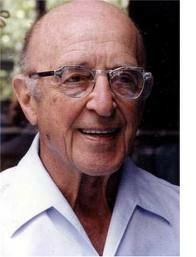
NLP person-centred therapy was then born and is deeply inspired by Carl Rogers six conditions needed to produce personality changes:

  1. Psychological contact or a relationship between the therapist and the client (on the professional basis of course!), where there’s rapport and respect of both persons as important individuals.
  2. Client’s congruence, where the client actually is aware of the issue and genuinely wants to change it.
  3. Therapist’s congruence: now I personally think this is a very important one: the therapist is genuinely involved in the session and will display honesty and care for their client.
  4. Therapist unconditional positive regard towards the client, with a genuine belief that the client has all the inner resources and the capacity to change
  5. Therapist’s empathy, where the therapist feels compassion and empathy for the client in order to fully understand their map of the world
  6. Client’s perception of the therapist’s empathy: not only is it necessary for the therapist to have empathy, but it is essential that the client receives it appropriately.

I have been applying those principles in my personal NLP/hypnotherapy practice for a while now and I have noticed indeed how much more effective those sessions were. I do believe that in order to change, people need unconditional support and approval, and I think that’s what describes best in essence our new person-centred NLP approach.